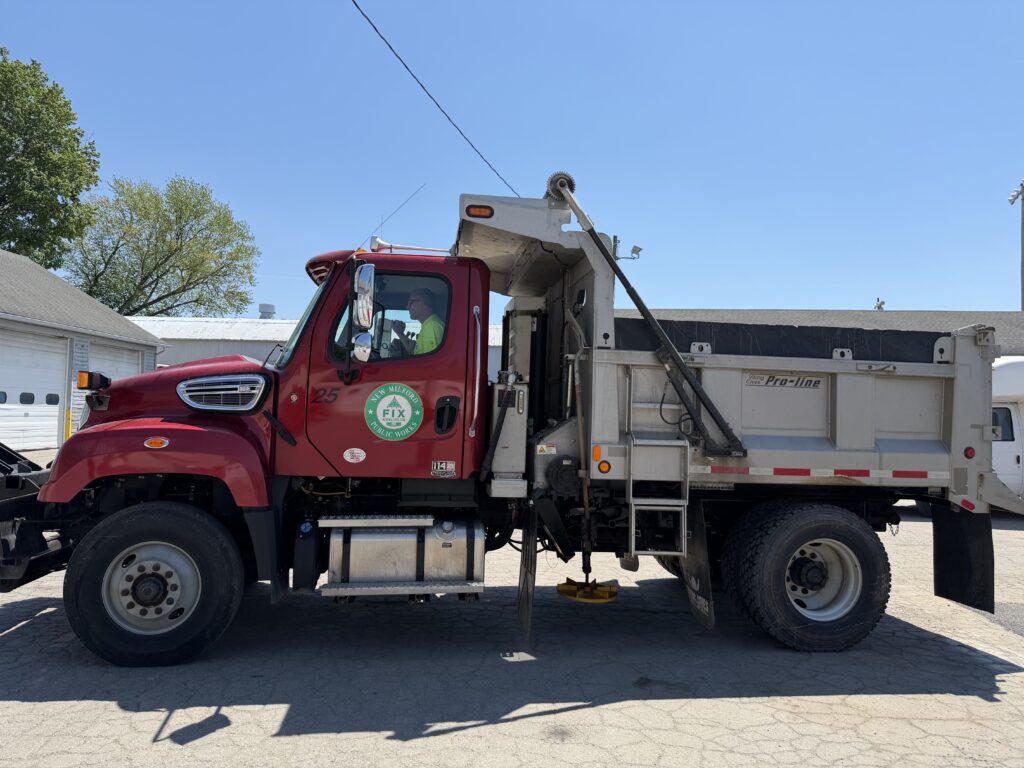
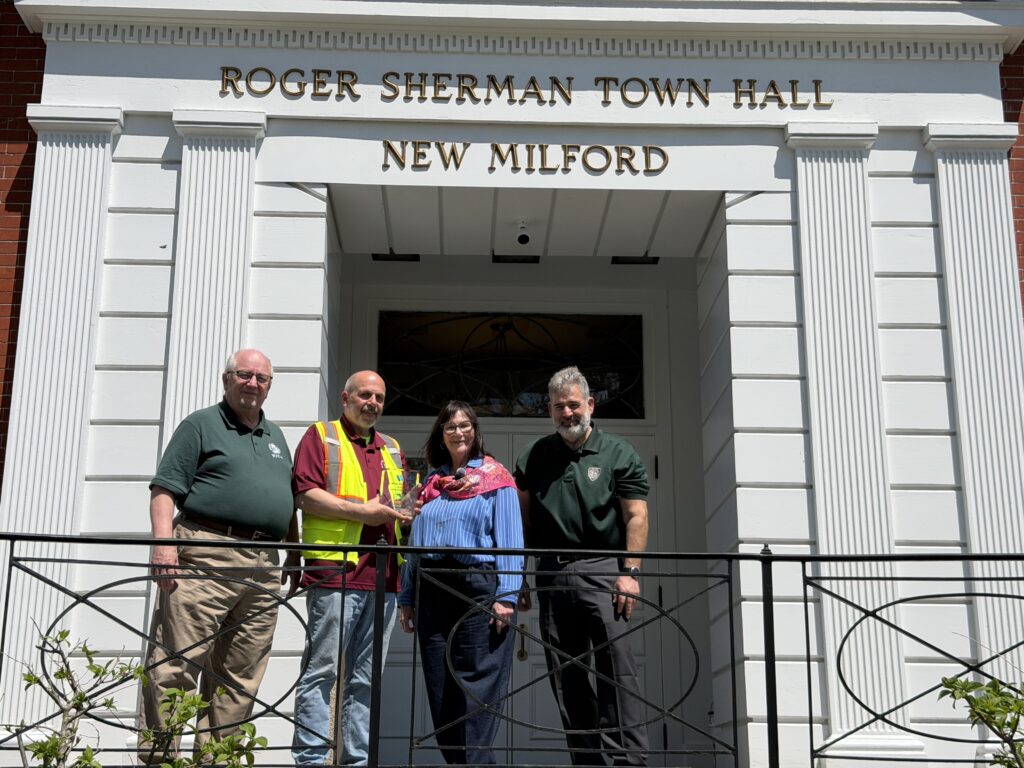
Introducing the Town of New Milford
Located in Litchfield County, Connecticut, the Town of New Milford oversees an extensive infrastructure network spanning 212 miles of roads and nearly 60 bridges.
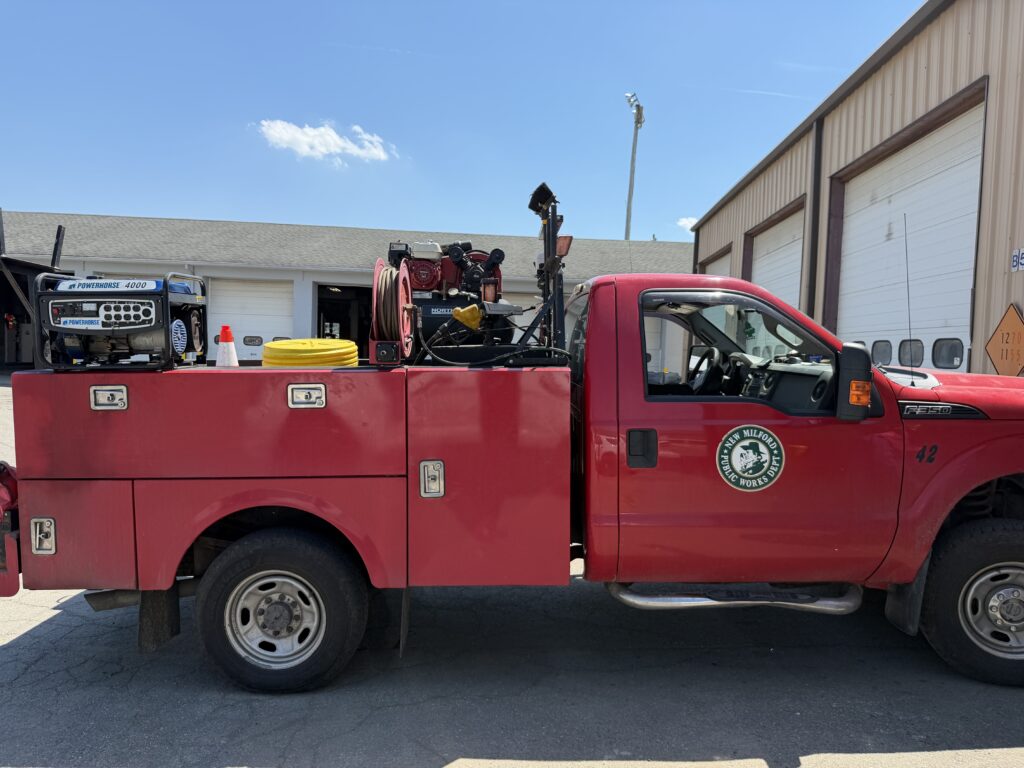
The municipality’s Public Works department, split across four divisions of Engineering, Facilities Maintenance, Highway, and Vehicle Maintenance, is responsible for maintaining that critical infrastructure along with a diverse fleet of more than 130 assets.
From road graders and dump trucks to excavators and mowers, keeping the equipment running safely is the day’s work. But for years, paper-based inspections, defect reporting, and maintenance tracking were making that work harder than it needed to be.
The challenge: paperwork, finger-pointing, and no accountability
New Milford’s equipment operators conducted inspections on paper forms that were often misplaced or incomplete, leaving the town with limited insight into asset condition and repair needs. The disjointed process created friction between drivers and mechanics.
“The vehicle maintenance guys have a tendency to blame the drivers, and the drivers blame the maintenance guys for not doing their jobs,” said Michael Boucher, New Milford’s Highway Foreman. “We had cabinets full of paperwork, but no accountability.”
Without a centralized way to report defects promptly, small issues frequently spiraled into larger, costly failures that impacted operations. Town leadership also lacked visibility into maintenance spending when determining vehicle replacement schedules during budget planning.
The solution: a digital workflow that connects the cab to the shop
After evaluating multiple fleet management solutions, Boucher and New Milford turned to Whip Around.
“This one seemed to be the least cumbersome and exactly what we were looking for,” said Boucher. “It’s simple for everybody to use.”
Using Whip Around’s mobile app, operators now conduct digital inspections with custom checklists across every asset in the fleet. Mandatory photo requirements validate defect reports and eliminate miscommunication.
Mechanics receive defect notifications and update repair status in real time, closing the communication gap that had defined the previous workflow. Detailed maintenance records also give town leadership full transparency into repair costs and downtime metrics.
“Whip Around has changed the physical connection between my highway team and vehicle maintenance,” said Boucher. “It takes the head-butting out of it with everything streamlined through the app.”
For drivers, the change was just as visible from the cab.
“The system is working good as far as working with [the team] in the garage,” said Bob Raymond, Driver, Highway Maintenance. “It’s hard to fall in between the cracks.”
The driver’s view: catching defects in the lot, not on the road
Where managers see process improvement, drivers see safety. Raymond’s crew shares trucks across shifts, and being able to see an asset’s full history before climbing in matters.
“We share trucks also, so that helps me,” said Raymond. “If I drive this truck over here and I haven’t driven that truck ever, I can get on Whip Around and look at the history of the truck — what’s been troubling this truck in the past.”
If a dump truck has a history of brake issues, Raymond says the Whip Around app will be able to tell him, and he can spend a little extra time checking the brake system before leaving.
The digital workflow also closed the old gap between the driver and the garage. Where paper tickets used to disappear, an iPad now keeps everyone on the same page, including when a truck isn’t ready to roll.
“The old way was writing the ticket out and sometimes the ticket gets misplaced,” said Raymond. “Now everybody has an iPad. You can just pull up your iPad and look at the ticket. ‘Oh, they didn’t get to it yet. OK, I gotta go find another truck to drive.'”
And when it comes to why this matters beyond the day-to-day, Raymond doesn’t mince words about the Whip Around app.
“This is what covers you and keeps you out of court,” said Raymond. “God forbid if you do get in an accident, you pull out your Whip Around, you say the truck was inspected, and this is what I found this morning.”
Key results
The numbers from New Milford’s 2025 reporting period show what a paperless inspection and maintenance workflow looks like at scale.
- 1,915 defects identified — a 127% year-over-year increase. Drivers reported 2.3x more issues proactively, meaning more problems are being caught at pre-trip, not after a breakdown on the road.
- Defect resolution time dropped from 22 days to 6.5 — a 70% reduction. When a defect is reported through the app, the work order lands with the shop immediately. Mechanics know what’s broken, when it was reported, and which asset needs attention.
- 1,334 work orders completed — a 64% year-over-year increase. Every one of them documented, time-stamped, and tied to the specific asset — creating a defensible maintenance record for audits, insurance, and budget conversations.
- 99.8% of defects corrected. A near-perfect close-out rate on identified issues — the kind of operational benchmark that’s hard to achieve when records live in a filing cabinet.
“Now we have the information for as long as we need it,” said Boucher. “I can be proactive about scheduling preventive maintenance based on real-time mileage data.”
A culture shift on top of the numbers
New Milford’s move to a digital workflow has done more than improve metrics. It has changed the relationship between drivers and mechanics, and between operations and town leadership.
Issues no longer slip through the cracks. Drivers know the shop will see their defect report. The shop knows the driver actually walked the truck. Town leadership, including the Mayor, can pull operational data when they need it. And the records exist not to satisfy a paperwork requirement, but to do the job they’re meant to do: prove the work was done.
“If there’s a problem, it’s reported instantly. We just don’t drive equipment with defects anymore,” said Boucher. “Whip Around has absolutely made our operations safer.”
Raymond added, “If you don’t do your inspections, you’re driving a time bomb down the road for the public and yourself.”