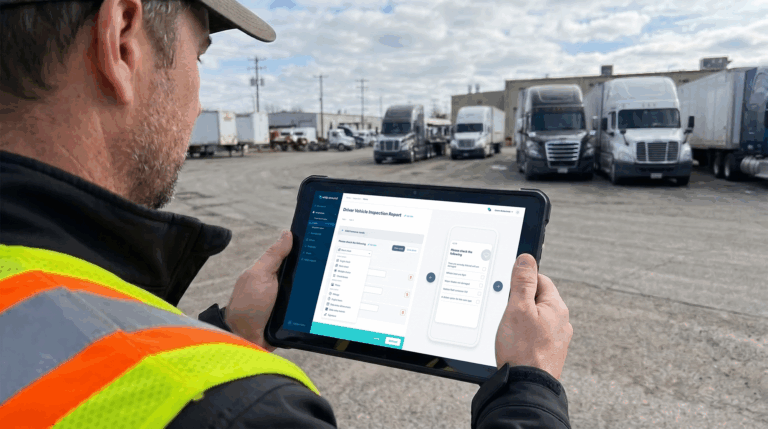
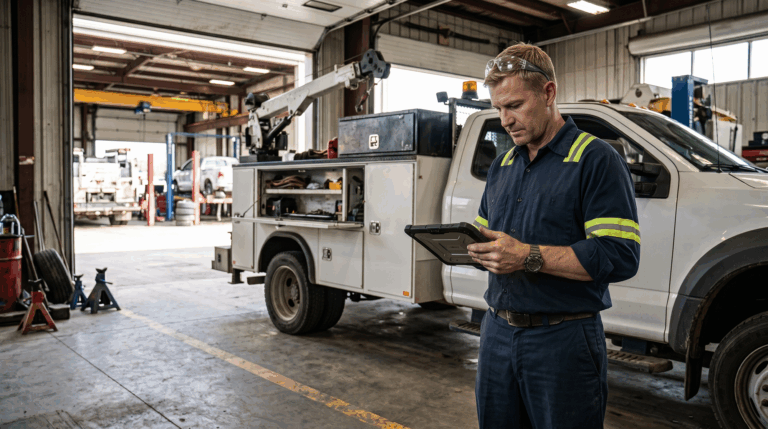
A missed defect can sideline a truck, delay loads, and put safety at risk. That’s why DOT pre-trip inspections remain a daily, non-negotiable habit for CDL drivers and fleets operating under FMCSA compliance rules. A consistent dot pre trip inspection checklist helps drivers catch issues early, avoid roadside violations, and keep vehicles road-ready.
This guide covers what a DOT pre-trip inspection is, who must perform it, a system-by-system inspection checklist, timing and record-keeping requirements, common pitfalls of paper inspections, and how switching to electronic inspection workflows (eDVIR) can streamline compliance and maintenance.
What is a DOT Pre-Trip Inspection?
A DOT pre-trip inspection is a driver’s documented walk-around and function check performed before operating a commercial motor vehicle (CMV). Its purpose is to confirm the vehicle is safe to operate, identify defects before they become dangerous, and support compliance with FMCSA requirements (especially the inspection, repair, and maintenance rules outlined in Part 396).
In short: it’s preventive safety and compliance in action—completed before wheels turn to reduce risk, downtime, and costly surprises.
Pre-trip vs. post-trip vs. mid-trip inspections
These inspections work together to create a continuous safety workflow:
- Pre-trip: completed before the vehicle is operated to catch defects early
- Post-trip: completed after operation so defects are documented and resolved before the next shift
- Mid-trip: quick checks during the day (often at stops) to ensure conditions haven’t changed
Post-trip inspections are especially helpful because they set the next driver or shift up for success by identifying issues before the vehicle returns to service. Learn more about the importance of post-trip inspections.
Who Is Required to Perform DOT Pre-Trip Inspections?
DOT pre-trip inspections are required for drivers operating CMVs subject to FMCSA rules. This includes fleets and owner-operators across industries like freight, logistics, construction, field services, and more.
While drivers are responsible for conducting the inspection before driving, fleet managers and safety leaders are responsible for ensuring:
- inspection processes are standardized
- defects are repaired before vehicles return to service
- documentation supports compliance requirements
- inspection and maintenance records are stored and accessible
If your fleet operates CDL vehicles, implementing a consistent inspection process protects not only compliance, but uptime and operational performance.
Complete DOT Pre-Trip Inspection Points Checklist
Use this dot inspection checklist pre trip to spot issues that impact safety, compliance, and uptime. Your exact checklist may vary based on vehicle type and operation, but the sections below reflect widely used CDL pre-trip inspection points.
Important note: A CDL pre-trip inspection checklist is not the same thing as an annual DOT inspection checklist. Pre-trips happen daily and are driver-performed; annual DOT inspections are conducted by qualified inspectors and documented separately. (More on recordkeeping below.)
Engine Compartment
Check:
- Engine oil level, coolant level, power steering, and windshield washer fluid
- Belts, hoses, and clamps for cracks, fraying, or leaks
- Battery connections (secure, no corrosion, cables intact)
- No visible fluid leaks under vehicle or around components
Exterior Vehicle
Check:
- Headlights, high/low beams, turn signals, hazards, brake lights, reverse lights, reflectors
- Mirrors and windows secure; windshield free of major cracks
- Tires: PSI, tread depth, cuts, bulges; wheels and lug nuts secure
- Body panels, steps, doors, fenders secure; fuel tank cap tight; no visible leaks
Interior / Cab
Check:
- Gauges (oil pressure, coolant temp, air pressure), indicator lights, alarms
- Horn and steering free play within acceptable limits
- Wipers/washers, defroster, and climate control
- Seat belts and safety devices in working order
- Required documents (registration, insurance, permits as applicable)
Brake System
Check:
- Service and parking brakes function properly
- For air brakes: air build-up test, leak test, low-pressure warning
- No audible air leaks; lines and fittings intact
- For hydraulic systems: check for leaks and abnormal pedal feel
Coupling System (for Tractor-Trailers)
Check:
- Fifth wheel mounted securely; locking jaws/latch engaged
- Apron and kingpin undamaged; platform and pivot pins intact
- Air/electrical lines connected, secured, and free of abrasion
- Glad-hands sealed; no leaks
If your team needs printable checklists or templates, referenceDOT inspection checklist templates (this is especially useful for comparing checklists and formats).
DOT Inspection Timing and Frequency Requirements
DOT inspections are often confused with CDL pre-trip inspections, so it’s helpful to clarify timing and compliance expectations. Pre-trips happen frequently and are driver-led; DOT inspections can refer to annual inspections and broader regulatory compliance requirements.
When to Perform Inspections
A pre-trip inspection should be completed:
- Before each shift
- Any time a driver takes control of a vehicle previously operated by someone else
- After repairs, as a focused re-check to confirm defects are resolved
This supports vehicle safety and reduces the risk of operating an unsafe CMV.

Record-keeping Requirements
FMCSA regulations require carriers to maintain inspection, repair, and maintenance documentation (49 CFR Part 396). At a high level:
- Keep proof of annual DOT inspections for 14 months
- Keep maintenance/repair records for 12 months while the vehicle is in service, plus 6 months after it leaves service
- Ensure defects are corrected before returning a vehicle to operation
If your fleet is preparing for a compliance review, this resource is useful:compliance checklist for DOT audit.
Is a Pre-Trip Inspection Required by DOT?
Yes. FMCSA §396.13 requires drivers to be satisfied that a vehicle is safe to operate before driving. That makes the pre-trip inspection a core compliance requirement, not an optional best practice.
Common Issues With Paper-Based Pre-Trip Inspections
Paper checklists are common—but they create gaps that can lead to missed defects, delayed repairs, and audit exposure. Many fleets struggle with:
Lost or incomplete paperwork
Forms can go missing, get damaged, or be turned in late—especially across multiple drivers and shifts.
Time-consuming manual processes
Paper adds friction: slow inspections, illegible notes, and incomplete fields.
Delayed maintenance due to communication gaps
When defects don’t reach technicians quickly, repair timelines stretch and vehicles stay in service longer than they should.
Missed defects & unreadable entries
Rushed walk-arounds or unclear handwriting can hide serious issues.
Lack of real-time visibility for fleet managers
Without a live view of vehicle status, managers can’t prioritize repairs, schedule efficiently, or ensure compliance.
If you want a broader breakdown of inspection workflow best practices, see theDriver vehicle inspection process.
Benefits of Switching to Digital Pre-Trip Inspections
Switching from paper to electronic workflows (eDVIR) strengthens inspection consistency, reduces downtime, and improves compliance.
Improved accuracy and compliance
Required fields, timestamps, and digital signatures reduce missed information and documentation gaps.
Instant photo documentation and notes
Drivers can attach photos and clear comments so technicians know exactly what’s wrong.

Real-time alerts to maintenance teams
Critical defects can trigger notifications immediately instead of waiting for paperwork handoff.
Faster defect resolution and reduced downtime
Digital reporting shortens the time between “defect found” and “repair started.”
Centralized record storage for audits
Inspection history becomes searchable by vehicle, driver, location, or issue—making audits and compliance reviews easier.
For a deeper look into how digital DVIR systems work, see Benefits of switching to eDVIR.
How Whip Around Transforms DOT Pre-Trip Inspections
Whip Around helps fleets replace manual pre-trip inspection forms with a faster, more consistent digital process that supports compliance, safety, and uptime. Instead of treating inspections as paperwork, Whip Around embeds them into your daily fleet operations.

Complete mobile DVIR submission
Drivers complete inspections on any device, using forms tailored to your fleet’s requirements—often with required photos and structured defect reporting.
Real-time dashboard for fleet visibility
Fleet managers and maintenance teams see issues instantly, including defect severity, status, and follow-up needs.
Integration with maintenance & work orders
Defects can be converted into work orders, helping teams track repair progress and prevent repeat issues. This supports preventive maintenance and reduces the risk of mechanical failures.
Alerts and historical reporting for audits
Digital inspection logs with timestamps and signatures help fleets stay ready for compliance checks and respond quickly during audits.
Tip: This section is a great place to add 1–2 product screenshots (dashboard view + driver mobile workflow) as recommended in the brief.
DOT Pre-Trip Inspection FAQs
How long should a DOT pre-trip inspection take?
Many fleets budget 15–30 minutes, depending on the vehicle and condition. The priority is consistency and thoroughness—not speed.
What happens if I find a defect during inspection?
Document the issue clearly and tag the vehicle out of service if needed. Ensure the repair is completed and verified before the vehicle returns to operation. Digital workflows help route defects directly to maintenance and track closure.
Are electronic DVIRs legally acceptable?
Yes. Electronic DVIRs are acceptable when they capture required information, include signatures/timestamps, and are retained according to FMCSA requirements.
How long must inspection records be kept?
In general: annual inspection documentation should be kept 14 months and maintenance/repair records 12 months in service + 6 months after the vehicle leaves service. Your specific DVIR retention policy may vary based on operation and state rules.
What are the penalties for skipping pre-trip inspections?
Skipping or failing to perform pre-trip inspections can contribute to roadside violations, out-of-service orders, and increased liability exposure in the event of an incident. Fleets may also face greater compliance risk if records are incomplete or inconsistent.
Final Takeaway: Make Pre-Trip Inspections Consistent and Reliable
A consistent dot pre trip inspection checklist protects drivers, supports FMCSA compliance, and prevents downtime caused by avoidable defects. While paper checklists can work in theory, digital inspections make it easier to complete inspections thoroughly, document defects clearly, and route issues to the right team immediately.
If you want to streamline pre-trip checks, defect management, and audit-ready recordkeeping, consider trying Whip Around, or offer drivers a downloadable checklist as a starting point.