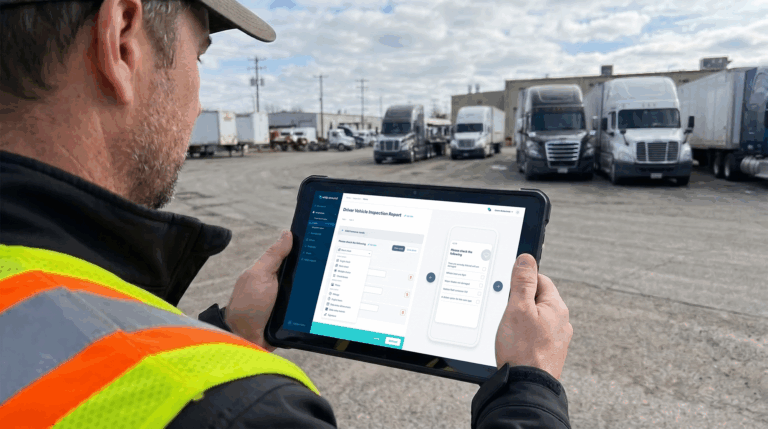
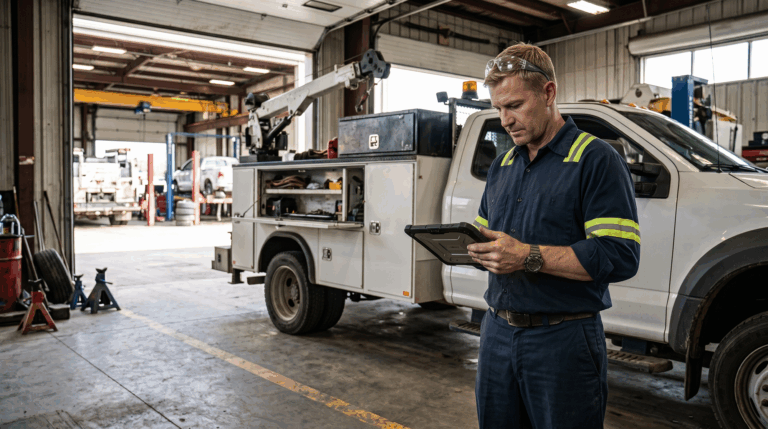
A driver flags a worn brake pad on a pre-trip inspection. The DVIR gets submitted, logged, and filed. Two weeks later, that same brake pad is still worn — because nobody assigned a work order, nobody followed up, and the vehicle kept rolling. This is the maintenance loop left open, and it’s more common than most fleet managers would like to admit. Inspections only reduce risk if every defect they surface actually gets fixed. This article covers what it means to close the maintenance loop, why open defects are so expensive, and how to build a defect resolution process that holds up from the inspection app to the shop floor.
What Does “Closing the Maintenance Loop” Mean?
Closing the maintenance loop means every defect identified during an inspection is tracked through to a completed repair, verified, and documented — not just recorded. An open loop is any defect that gets reported but never resolved: a DVIR that sits in a folder, a fault code that pings a dashboard nobody checks, a “needs attention” note that never becomes a work order. A closed loop connects detection, assignment, repair, and verification into one continuous, auditable process.
Most fleets have the “detection” half of this figured out. Drivers submit DVIRs, telematics systems throw fault codes, technicians note issues during PMs. The gap shows up on the back half, turning what was found into what gets fixed.
Why Defects Go Unresolved
Open defects aren’t usually the result of one big failure. They’re the product of a process with too many gaps for anything to fall through consistently.
Paper and disconnected forms
A paper DVIR or a PDF checklist creates a record, but not a workflow. Once it’s signed and handed in, there’s no built-in mechanism that turns “brake pad worn” into an assigned job with a due date. It just becomes another piece of paper in a stack.
No clear ownership
When a defect is reported but nobody is explicitly responsible for acting on it, it defaults to nobody. Shop foremen assume dispatch is handling it; dispatch assumes the driver flagged it to maintenance directly. Ownership gaps are where defects die quietly.
Alert fatigue
Fleets running telematics alongside manual inspections often generate more fault codes and flagged items than any one person can triage. Without a way to prioritize by severity, low-risk and high-risk defects compete for the same limited attention, and the serious ones don’t always win.
The Real Cost of an Open Defect
An unresolved defect isn’t a paperwork problem, it’s a downtime and liability problem that compounds the longer it sits.
Unplanned repairs typically cost 3 to 9 times more than the same job done as planned maintenance, according to industry benchmarks, because a defect caught early is a scheduled repair and a defect caught late is a roadside breakdown. Fleet downtime already costs U.S. businesses an estimated $50 billion or more per year, and every open defect is a small, silent contributor to that number. For construction fleets specifically, idle heavy equipment can cost $450 to $760 an hour depending on the asset, a cost that starts the moment a known issue takes a vehicle out of rotation unexpectedly instead of on a planned schedule.
There’s also the compliance exposure. The FMCSA requires DVIRs for commercial motor vehicles over 10,000 lbs GVWR, and the expectation isn’t just that defects are reported — it’s that they’re corrected before the vehicle returns to service. A documented defect with no corresponding repair record is one of the more damaging findings in a DOT audit, because it shows the fleet knew about a safety issue and didn’t act on it.
What a Closed Loop Actually Looks Like
A closed-loop process has four parts working together, not four separate systems that each hold a piece of the story.
Defects become work orders automatically
The moment a driver fails an inspection item or a fault code fires, that defect should generate a work order without someone manually re-entering it into another system. Every hand-off between systems is a place a defect can get lost.
Severity drives priority
Not every defect is equal. A cracked mirror and a failed air brake test shouldn’t sit in the same queue with the same urgency. A working loop sorts by severity so the vehicles that need to be pulled from service are pulled, and the rest get scheduled without unnecessary downtime.
Nothing returns to service unverified
Closing a work order should require confirmation that the repair actually happened, not just that a ticket was marked done. That verification step is what separates a real closed loop from a status field someone updates out of habit.
The whole history is documented
From the original DVIR to the assigned work order to the completed repair, the full chain needs to be stored and retrievable. That’s what turns a maintenance process into an audit-ready record.
How Whip Around Closes the Loop From Inspection to Repair
This is exactly the gap Whip Around’s fleet maintenance software is built to close. When a driver fails an item on a digital inspection, Whip Around’s defect-to-work-order automation generates a work order immediately — no re-keying the defect into a separate maintenance system, no waiting for someone to review a paper form. AI Inspections Pro adds another layer by reviewing inspection photos automatically, flagging defects a rushed visual check might miss and keeping the documentation consistent across every driver and every shift.
For fleets running telematics, Whip Around’s integrations with Geotab, Samsara, and Motive bring fault codes into the same workflow as driver-reported defects, so a check-engine light and a driver’s written note about rough idling end up in the same queue instead of two disconnected systems. That combination of driver inspections and telematics data is what closes the gap between fleet maintenance and telematics software on their own. Every step ( the original defect, the work order, the parts used, the completed repair) stays attached to the asset’s service history inside Whip Around’s fleet reporting software, so a defect rate or an open-work-order count is a live number, not a quarterly guess.
General Insulation’s experience is a good example of what this looks like in practice, after moving to Whip Around, the construction fleet’s inspection process went from something drivers completed out of obligation to a system the whole operation actually relied on for safety and compliance.
Building a Defect Resolution Process That Sticks
Technology closes the mechanical gap, but the process around it needs to be deliberate too.
Set severity tiers before you need them. Define in advance which defect types trigger an immediate out-of-service hold versus a scheduled repair. Deciding this in the moment, under pressure, is how minor issues get escalated and serious ones get deferred.
Assign ownership by default, not by exception. Every defect should route to a specific person or role automatically, with a due date attached. If a work order doesn’t have an owner, it doesn’t have a deadline either.
Track defect resolution rate as a KPI, not just inspection completion rate. A fleet can have a 100% DVIR submission rate and still have a broken maintenance loop if half those defects never turn into a completed repair. Whip Around’s fleet-wide dashboards make that resolution rate visible alongside preventive maintenance schedules, so gaps show up before they become an audit finding or a roadside failure.
Review defect trends monthly, not just individual incidents. A tire that fails inspection twice in three months on the same route is a different problem than a one-off flat. Tracking trends is also where the ROI of asset maintenance software becomes concrete — recurring defects on the same asset are usually the clearest signal that a repair-versus-replace decision is overdue.
The Loop Only Works If It’s Actually Closed
An inspection program is only as strong as its weakest hand-off. Reporting a defect is the easy part — building the workflow, ownership, and verification that guarantees it gets fixed is what actually protects uptime, safety, and compliance standing. Fleets that treat defect resolution as a tracked process, not an afterthought, are the ones that catch problems on a shop floor instead of on the side of a highway.
If your inspections are generating defects faster than your team can close them, it may be time to connect the two. See Whip Around in action and find out what a fully closed maintenance loop looks like for your fleet, or start a free trial to try it with your own vehicles today.