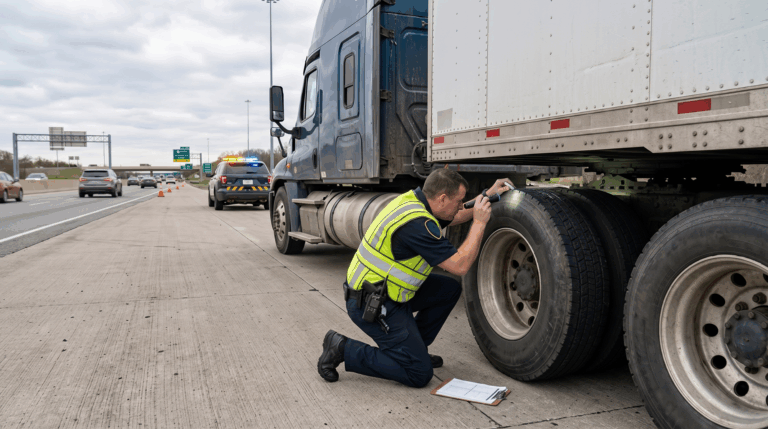
A driver is directed into an inspection area. The officer asks for credentials, reviews the vehicle, and may examine the load. At first, the driver may not know whether this will be a Level I or Level II inspection—or how much of the truck the officer will check.
Quick answer: Both Level I and Level II are driver and vehicle inspections under the Commercial Vehicle Safety Alliance (CVSA) North American Standard program. A Level I inspection is the more comprehensive procedure and can include checks that require access under the vehicle. A Level II inspection is a walk-around: it covers applicable driver and vehicle items that can be checked without the inspector physically getting under the vehicle. Neither is just a paperwork check. CVSA defines both levels here.
Knowing that difference helps drivers prepare the right information and helps maintenance teams understand what can be found at either level.
Level I vs Level II roadside inspection: The key differences
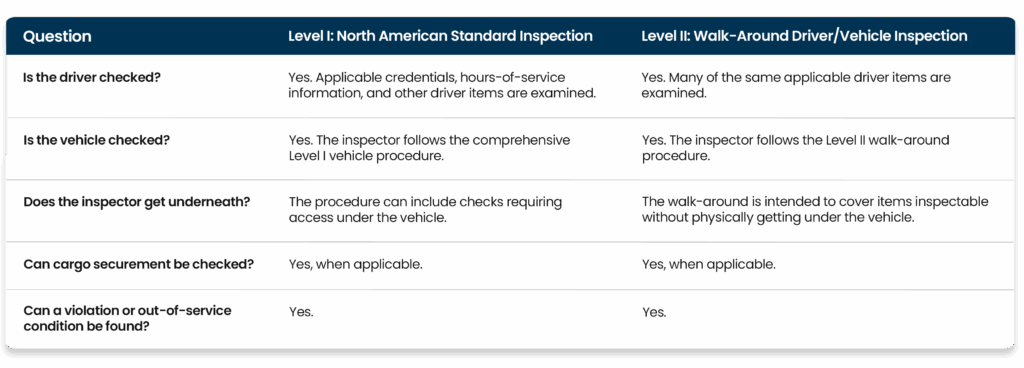
CVSA’s descriptions specify the minimum applicable items for each level. Among DOT roadside inspection levels, both of these examine the driver and vehicle. What an officer checks will also depend on the vehicle, cargo, driver, and inspection conditions. A Level II stop should not be treated as a vehicle-free or paperwork-only inspection.
CVSA inspection levels explained: What happens during a roadside inspection?
The stop’s sequence can vary by location and officer, but a driver can generally expect three parts.
1. The inspector checks the driver
For both levels, CVSA lists the driver’s license, medical certification and Skill Performance Evaluation certificate where applicable, hours of service and record of duty status where required, seat belt, alcohol and drug-related items, and relevant vehicle inspection reports among the items examined.
Drivers should know which documents apply to their operation. A driver using an HOS exception, for example, should understand its conditions; an item CVSA lists “if applicable” is not automatically required of every driver.
2. The inspector examines the truck, trailer, and load
Both levels can include brakes, tires, wheels, lighting, steering, suspension, fuel and exhaust systems, coupling devices, and cargo securement where relevant. At Level I, the inspector can carry out the more extensive vehicle procedure, including under-vehicle checks. At Level II, the vehicle examination is conducted as a walk-around without physically getting underneath it. CVSA’s inspection-level definitions set out the applicable categories for each.
A visible tire problem, a faulty lamp, or an unsecured load can matter in either inspection. Drivers should address defects before dispatch instead of assuming a walk-around will miss them. Whip Around’s DOT pre-trip inspection checklist offers a practical starting point for routine checks.
3. The driver and carrier receive the inspection result
The inspector may record no violations, cite violations, or place a vehicle or driver out of service when an applicable condition warrants it. FMCSA explains that an out-of-service vehicle cannot continue to be operated until the safety issue is corrected; drivers can also be placed out of service. Both clean and violation inspections can become part of the carrier’s Safety Measurement System data.
The fleet should get the report to the right safety and maintenance staff, review every finding, and document the response. A finding that requires repair needs a clear path to correction before the vehicle is returned to work.
Roadside inspection documentation: What should drivers have ready?
Prepare for the documents and records that apply to the trip and equipment. The useful list includes the proper driver’s license and endorsements, current medical status or certificate where applicable, required HOS records, applicable prior vehicle inspection reports, and other vehicle or cargo documents required for the operation. The exact request can vary; the CVSA level descriptions distinguish required items from those that apply only in certain circumstances.
The practical goal is quick access to accurate records. If an officer asks about a defect noted on a previous report, the driver should be able to locate the report and the related repair or certification. Whip Around Wallet helps organize licenses, medical certificates, permits, and other documents with expiration reminders. Its fleet compliance software connects DVIR and defect records, making it easier for teams to retrieve the history behind a repair. The fleet remains responsible for carrying and producing each document required by the applicable rules.
How fleets can prepare for both inspection levels
A roadside inspection is one moment in a longer maintenance process. Drivers need a repeatable way to check the vehicle, record problems, and confirm that previously reported safety defects were addressed. Managers need visibility into those findings before the next dispatch.
Use digital vehicle inspections to capture photos and driver notes on the relevant vehicle or trailer. Route confirmed defects into fleet maintenance so repairs and sign-offs stay connected to the inspection history. Review recurring findings by asset and component; if the same issue keeps appearing at roadside, look at the inspection checklist, repair process, and preventive maintenance schedule.
Frequently asked questions
What is the main difference between Level I and Level II roadside inspections?
Level I uses the more comprehensive North American Standard driver and vehicle procedure and can involve access under the vehicle. Level II is a driver and vehicle walk-around intended to cover items the inspector can examine without physically getting underneath. Both can include documents, brakes, tires, lights, and cargo securement when applicable.
Is a Level II inspection only a walk-around of the truck?
No. CVSA calls it a Walk-Around Driver/Vehicle Inspection. Applicable driver credentials, HOS information, and vehicle inspection reports are part of its minimum items alongside vehicle checks.
Can a truck be placed out of service after a Level II inspection?
Yes. An officer can identify an out-of-service condition during either level. The shorter physical scope of Level II does not make an unsafe vehicle eligible to continue operating.
Does a clean DVIR guarantee a clean roadside inspection?
No. A DVIR records the driver’s findings at a point in time. Vehicle condition can change, and the roadside inspector performs an independent examination. Consistent pre-trip checks and prompt repairs improve preparation, but no single record guarantees the result.
What happens after a roadside inspection identifies a defect?
Review the inspection report, determine whether the vehicle or driver was placed out of service, and arrange the required correction. Keep the finding and repair documentation connected so the team can verify what was done before returning the vehicle to operation.