If your trucks cross state lines, buying diesel is only half of the IFTA recordkeeping picture. You also need to know where each qualifying vehicle traveled, how far it went in each jurisdiction, and which purchases fueled that vehicle. That distinction is especially important for construction fleets that use the same fuel cards or bulk tanks for road trucks and jobsite equipment.
The short answer: For IFTA fuel tax reporting, track each qualified motor vehicle’s distance by jurisdiction, total distance, fuel placed into qualified vehicles by fuel type, and tax-paid fuel purchases supported by usable records. Keep trip and fuel records detailed enough to reconcile your quarterly return and support an audit. Fuel purchased in one state is not the same as fuel used while driving through that state. The IFTA Procedures Manual’s recordkeeping sections explain the underlying requirements.
Which trucking and construction vehicles are subject to IFTA?
IFTA generally applies when a qualified motor vehicle operates in at least two IFTA member jurisdictions. A qualified motor vehicle used to transport people or property meets at least one of these tests:
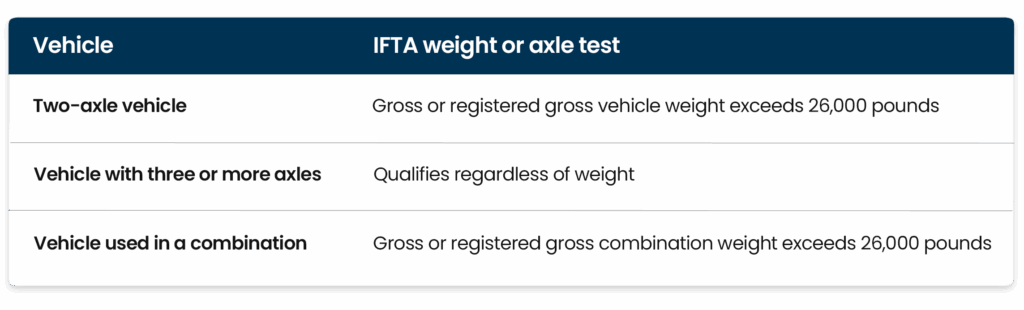
These are the IFTA definition of a qualified motor vehicle, rather than a test of whether the load itself is construction equipment. A three-axle dump truck crossing a state line may qualify even if it weighs less than 26,000 pounds. A truck and trailer combination hauling an excavator may qualify when the combination exceeds the threshold. A carrier with only occasional interstate trips should check the applicable temporary fuel-permit option with the jurisdictions involved.
For IFTA fuel tax for construction fleets, classify the vehicle doing the hauling first. An excavator riding on a trailer does not become an IFTA vehicle because it crosses a state line as cargo. A self-propelled vehicle used on the road can require a separate, fact-specific classification. For a broader view of tracking both trucks and equipment, see Whip Around’s construction fleet management guide.
What actually has to be tracked for an IFTA return?
Think of the records in four connected layers:
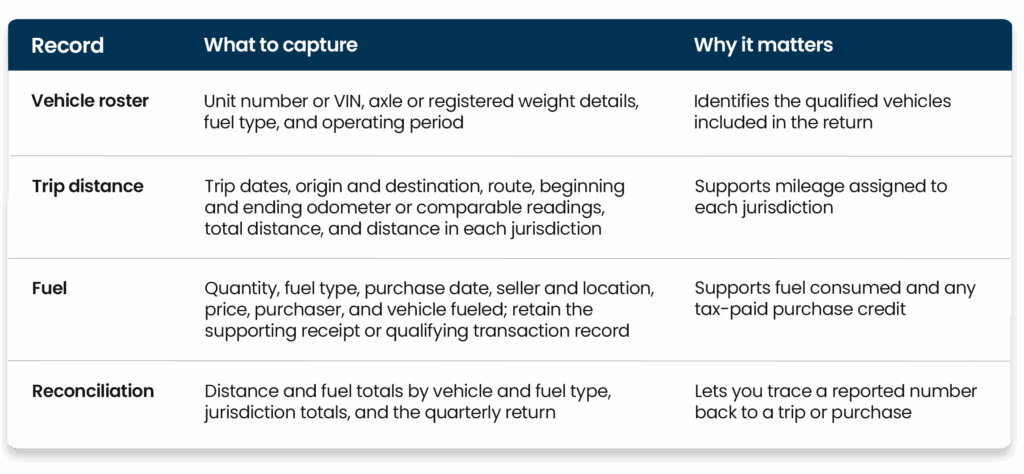
Under the IFTA Procedures Manual, manual or other non-tracking-system trip records with the listed distance elements are accepted as adequate; GPS vehicle-tracking records have additional technical requirements, including readings at least every 10 minutes while the engine is on and an exportable electronic format. Do not assume a static map screenshot or a fuel-card statement alone satisfies the distance record requirement.
1. Distance driven in each jurisdiction
Record all trip distance and the distance in each jurisdiction, including trips that stay within your base jurisdiction. Keep the origin, destination, route, dates, meter readings, and vehicle ID so a reviewer can reproduce the totals. A truck that buys fuel in one state and spends most of its miles in another still needs mileage assigned to the jurisdictions where it actually traveled. Check jurisdiction-specific rules before treating any miles as exempt.
2. Fuel placed into each qualified vehicle
For retail fueling, retain a receipt, invoice, credit-card record, third-party transaction listing, or digital copy that meets the IFTA fuel-record requirements. To support a tax-paid credit, the record needs the purchase date, seller name and address, quantity and type of fuel, price, vehicle identification, and purchaser name. Verify the jurisdiction and vehicle assignment before reporting the transaction.
A fuel-card feed is useful, but the transaction still needs to point to the truck that received the fuel. A card number, driver name, or site code on its own may not tell you whether a purchase went into a road truck, an excavator, or a portable tank.
3. Bulk-tank deliveries and withdrawals
If your fleet fuels from its own tank, retain delivery records, tank capacity, quarterly inventory reconciliations, and a record of withdrawals. For each withdrawal, document the storage location, date, quantity and type of fuel, and the vehicle or equipment fueled. A tax-paid IFTA credit for bulk fuel also requires proof that the appropriate jurisdiction’s fuel tax was paid on the fuel delivered into storage or otherwise paid to that jurisdiction. The IFTA Procedures Manual sets out these bulk-fuel requirements.
This is where IFTA compliance for construction equipment becomes a practical data problem: use distinct asset IDs for the haul truck and the machine, even when both draw from the same tank.
4. Quarterly totals and supporting records
Reconcile trip miles, fuel placed into qualified vehicles, and tax-paid purchases by fuel type and jurisdiction before filing with your base jurisdiction. The IFTA return apportions fuel tax based on travel and fuel use; it is not simply a list of fuel receipts. Fleet summaries can be requested in an audit. Keep applicable records for four years after the return was due or filed, whichever is later, and longer where an audit, waiver, or other applicable requirement extends the period. See the IFTA retention and audit rules.
Example: fuel tax reporting for heavy equipment transport
Suppose a construction company sends a qualifying truck and trailer from State A to a jobsite in State B with a loader on the trailer. The truck buys diesel in State A, drives through both states, and then refuels the loader from a jobsite tank.
For interstate equipment hauling tax reporting, the company should record the truck’s miles in each state and keep the truck’s fuel purchases and bulk withdrawals linked to that truck. Fuel dispensed into the loader should be recorded separately as equipment fuel. It is not a tax-paid IFTA purchase for the haul truck merely because the same carrier paid for it. IFTA’s fuel-record rules say tax-paid credit is not allowed for fuel placed into a vehicle other than a qualified motor vehicle.
If a truck operates off highway, or an unusual vehicle moves under its own power, review the relevant jurisdiction’s rules rather than applying a blanket exemption. The recordkeeping approach starts with identifying the vehicle, where it traveled, and where the fuel actually went.
Where fuel-card integrations help—and where they stop
Whip Around’s fuel-card integrations support WEX and Coast, bringing fuel transactions alongside vehicle, maintenance, and inspection data. Its fuel management software helps teams review fuel use and spend. For WEX, the integration guide describes vehicle mapping by VIN or license plate and transaction data such as purchase date, location, and fuel amount.
That visibility can help a fleet manager spot a purchase assigned to the wrong truck, compare fuel expense with vehicle history, and prepare a cleaner source dataset. Fuel-card integration does not by itself establish jurisdiction-by-jurisdiction mileage, verify every receipt required for an IFTA credit, calculate an IFTA return, or file it. Keep a separate auditable mileage process and reconcile purchases, bulk withdrawals, and vehicle IDs before submitting your return. For related operational guidance, read how to manage fleet fuel costs and a fleet manager’s toolkit for monitoring fuel consumption.
A practical IFTA reporting checklist
- Identify the qualified vehicles. Review axle counts, registered weights, combinations, and interstate routes.
- Record every trip consistently. Capture dates, route, meter readings, vehicle ID, total distance, and miles in each jurisdiction.
- Separate road-truck fuel from equipment fuel. Code card purchases and bulk withdrawals to the asset actually fueled.
- Keep supporting purchase records. Check that records contain the details needed for tax-paid credits.
- Reconcile before each quarterly return. Compare vehicle and jurisdiction totals against trip logs, fuel records, and the base jurisdiction’s filing instructions.
- Retain audit-ready records. Preserve the original source data and any corrections for the required period.
IFTA fuel tax reporting FAQs
Does IFTA apply to construction equipment?
IFTA depends on whether the motor vehicle is a qualified vehicle operating across IFTA jurisdictions. An excavator carried as freight does not become a qualified motor vehicle because it is on an interstate load. A qualifying dump truck or truck-and-trailer combination may be subject to IFTA. For a self-propelled specialty vehicle, confirm its classification and any applicable exemption with the base jurisdiction.
Does a fuel-card statement replace IFTA receipts?
A seller’s or third party’s transaction listing may be an acceptable supporting record, but it needs the required details, including the vehicle fueled. Check your data export for missing seller, quantity, fuel type, price, purchaser, or vehicle information. See IFTA’s retail-fuel documentation rules.
Do fleets report where fuel was bought or where the truck drove?
Both. The return relies on distance traveled by jurisdiction and on fuel records, including where tax-paid fuel was purchased. A purchase location cannot substitute for a mileage record.
What if the fleet only crosses a state line a few times a year?
An occasional trip does not by itself change whether the vehicle is qualified. Ask the relevant jurisdictions about temporary fuel permits and the appropriate licensing path before travel.
How long should IFTA records be retained?
Generally, four years after the relevant return was due or filed, whichever is later, subject to extensions and audit-related requirements in the IFTA Procedures Manual.
Keep the fuel trail connected to the right asset
Accurate IFTA reporting starts with reliable trip and fueling records. For a construction carrier, the biggest improvement may be as simple as separating haul-truck transactions from jobsite equipment fuel and reconciling each truck’s miles by jurisdiction. Whip Around can help bring fuel transactions and asset history into view through its fuel management tools and integrations. Book a demo to see how those records fit your fleet’s workflow.