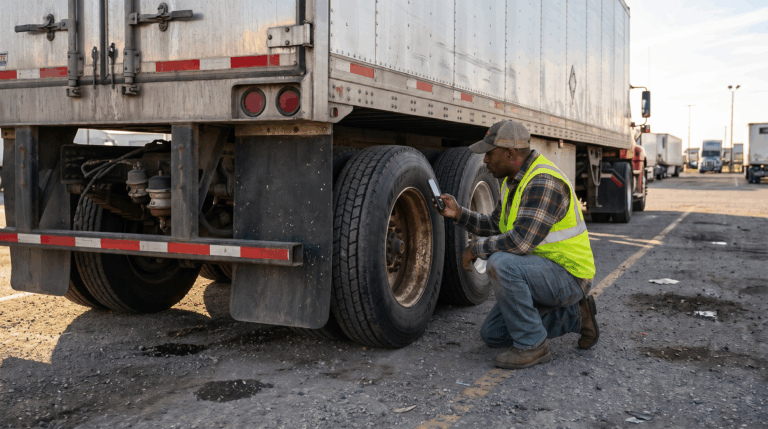
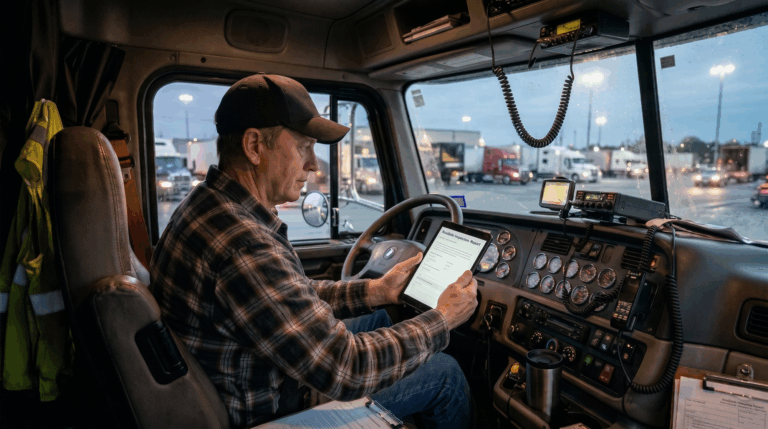
Most fleet safety programs look good on paper. The policies are written, the inspection forms are built, and the training is on the calendar. Then the rollout hits the yard, and drivers treat it as one more box to check. Pre-trips get rushed, defects go unreported, and the program turns into a compliance exercise nobody believes in.
The difference between a safety program that works and one that just exists is driver buy-in. A driver buy-in safety program strategy treats drivers as partners in safety instead of people to be monitored. This guide covers why drivers push back, eight practical ways to build real driver safety engagement, how to design incentives and recognition that reinforce the right behaviors, and how to measure whether it’s working.
What Is Driver Buy-In for a Fleet Safety Program?
Driver buy-in is when drivers actively support and take ownership of a fleet safety program because they understand its purpose, trust how it’s managed, and see a direct benefit to themselves. Bought-in drivers complete thorough inspections without being chased, report defects and near misses voluntarily, and hold each other to the standard.
Compliance and buy-in are not the same thing. A driver can sign every DVIR and still pencil-whip the inspection. Buy-in shows up in the quality of the work, not just whether it was completed, which is why it’s the foundation of any program built to strengthen your fleet safety program over the long term.
Why Drivers Resist Fleet Safety Programs
The stakes are high. Transportation incidents were the most frequent type of fatal workplace event in 2024, making up 38.2% of all occupational fatalities, according to the U.S. Bureau of Labor Statistics. The Network of Employers for Traffic Safety puts the average cost of an on-the-job crash to employers at $55,772, and $180,199 per on-the-job injury.
Drivers don’t resist safety itself. They resist programs that feel like surveillance, add time to an already tight schedule, or seem to exist mainly to assign blame after something goes wrong. If a driver reports a bad brake chamber and nothing happens for two weeks, they learn that reporting doesn’t matter. If the only time they hear from safety is after an incident, they learn the program is about discipline, not protection.
8 Ways to Build Driver Buy-In for Your Safety Program
Each of these strategies addresses one of the reasons drivers disengage. They work best together, but even two or three applied consistently will change how drivers see your program.
1. Involve Drivers Before You Roll Anything Out
Drivers support what they help build. Before launching a new policy, inspection form, or piece of technology, bring a small group of experienced drivers into the process. Ask them which inspection items are unclear, where the current process wastes time, and what hazards they see on their routes that management doesn’t.
A driver safety committee, even an informal one that meets monthly, gives drivers a real voice and gives you a group of respected peers who will champion the program on the ground. When other drivers hear “we asked for this” from a coworker instead of “corporate wants this” from a manager, adoption goes up.
2. Explain the Why in Driver Terms
“It’s a DOT requirement” is true, but it isn’t motivating. Connect each part of the program to something drivers care about: getting home safe, keeping their CDL clean, avoiding out-of-service violations at a roadside inspection, and not getting stuck on the shoulder with a breakdown.
Be specific. A thorough pre-trip catches the soft tire before it becomes a blowout at highway speed. A documented defect protects the driver if something fails later. When drivers understand that the program protects them first, the paperwork stops feeling like busywork.
3. Make Daily Safety Tasks Fast and Simple
If an inspection takes 25 minutes and requires a clipboard, a pen, and a trip to the office, drivers will cut corners. The easier you make the right behavior, the more often it happens. That means short, asset-specific inspection forms, a mobile app that works for drivers who aren’t tech-savvy, and photo capture so a defect can be documented in seconds.
Whip Around’s digital DVIR app is built around this principle. Jake Booz, Director of Maintenance and Procurement at Revolution Recovery, put it simply: “Some of our drivers have trouble with tech, and it was huge for us that they couldn’t get lost in the app.” After rolling it out, Revolution Recovery saw driver inspection participation increase by 32%.
4. Close the Loop on Every Defect Report
Nothing kills driver safety engagement faster than reporting a problem and watching it get ignored. Every defect a driver reports should get a visible response: acknowledged, scheduled, fixed, or explained. When drivers see that their reports lead to repairs, they keep reporting.
This is where connecting inspections to maintenance matters. With Whip Around, failed inspection items can automatically generate work orders in your fleet maintenance software, so the shop sees the issue immediately and drivers can see when it’s resolved. The driver’s report becomes the start of a repair, not the end of a form.
5. Build a Safety Incentive Program for Drivers That Rewards Behaviors, Not Just Outcomes
The most common mistake in a safety incentive program for drivers is rewarding only outcomes, like “zero accidents this quarter.” Outcome-only rewards can quietly discourage reporting, because drivers learn that disclosing a minor incident costs the whole team its bonus. OSHA’s recordkeeping rules prohibit retaliating against employees for reporting injuries, and incentive programs shouldn’t be structured in a way that discourages reporting.
Instead, reward the leading indicators that prevent crashes: consistent, complete pre-trip and post-trip inspections, defects reported with photos, near misses disclosed, training completed on time, and clean roadside inspections. Rewards don’t have to be expensive. Gift cards, extra PTO, preferred route picks, branded gear, and team meals all work when the criteria are clear, measurable, and fair.
6. Make Driver Safety Recognition Specific and Public
Recognition often matters as much as money. Effective driver safety recognition is specific (“Marcus caught a cracked fifth wheel on his pre-trip Tuesday”) rather than generic (“thanks for being safe”). Specific praise tells every other driver exactly what good looks like.
Share wins in safety meetings, team chats, newsletters, and on breakroom boards. Milestone awards for safe miles or years without a preventable incident give long-tenured drivers something to be proud of. Revolution Recovery treats its safety awards as a real achievement: “Receiving the safety award is a major accomplishment for each individual involved and our company as a whole,” said Booz.
7. Coach With Data, Don’t Punish With It
Inspection records, defect trends, and telematics data are powerful coaching tools, but drivers will resist them if every data point feels like evidence for a write-up. Use data to start conversations, not end them. Lead with what a driver is doing well, then focus on one specific improvement.
Data also lets you spot problems early. At General Insulation, visibility into inspection data helped reduce pencil-whipped inspections from 35% to just 1.5%. “We can get granular with the driver data to make sure that when they are getting in the cab of the truck, they’re performing that inspection and they’re doing it correctly,” said Ian Allison, Transportation and Supply Chain Manager.
8. Get Supervisors and Leadership Doing It Too
Drivers watch what leaders do, not what they say. If supervisors skip inspections on their own pickups, or managers only show up to the yard after an incident, drivers will conclude safety isn’t a real priority. Leaders should complete the same inspections, attend safety meetings, and respond quickly to driver concerns.
Frontline supervisors are especially important because they’re the ones drivers interact with daily. Train them to coach rather than police, give them the reporting tools to follow up on issues, and hold them accountable for closing the loop with their crews.
How to Measure Driver Safety Engagement
You can’t improve driver buy-in if you can’t see it. Track a mix of participation and quality metrics so you know whether drivers are engaged or just going through the motions:
- Inspection completion rate: the percentage of scheduled pre-trip and post-trip inspections actually completed
- Inspection quality: time spent per inspection, photo use, and signs of pencil-whipping
- Defect reporting volume: more reported defects early on often signals growing trust, not a worse fleet
- Defect resolution time: how quickly reported issues get fixed
- Near-miss reports, roadside inspection results, and preventable incident rates over time
Whip Around’s fleet reporting software shows driver inspection compliance rates, defect trends, and resolution status across every location in one dashboard. For fleets that want an extra layer of review, AI Inspections Pro automatically flags defects and anomalies in inspection photos, giving safety managers consistent data to coach from and recognize drivers against. Explore more of how the platform supports safety teams on our fleet safety management software page.
Frequently Asked Questions About Driver Buy-In
How do you get drivers to buy into a safety program?
Involve drivers in designing the program, explain how it protects them personally, make daily tasks quick and easy, and respond visibly to every defect they report. Reinforce the right behaviors with fair incentives and specific recognition, and make sure supervisors follow the same rules.
What should a safety incentive program for drivers reward?
Reward leading indicators such as complete inspections, defects reported, near misses disclosed, training completion, and clean roadside inspections. Avoid programs based only on zero incidents, which can discourage drivers from reporting problems.
What are good driver safety recognition ideas?
Shout-outs in safety meetings for specific good catches, safe-mile milestone awards, driver of the month programs, preferred route or schedule picks, extra PTO, and branded gear all work well. The key is tying recognition to a specific behavior so other drivers know what to repeat.
How long does it take to build driver buy-in?
Most fleets see early participation gains within the first few months if they close the loop on reported defects and recognize drivers consistently. Lasting fleet safety culture takes longer and depends on leaders reinforcing the program every week, not just at launch.
Make Safety the Easiest Part of a Driver’s Day
Driver buy-in starts with a program that respects drivers’ time, acts on what they report, and recognizes the people doing it right. The right tools make every part of that easier, from a fast mobile DVIR to defect reports that turn into repairs automatically. And with fixed, unlimited-user pricing, every driver, mechanic, and supervisor can be on the same platform.
See how Whip Around helps fleets build a safety program drivers support. Book a demo or start a free trial today.