A truck that misses one oil change doesn’t usually break down on a slow day. It breaks down mid-route, with a load on board and a driver waiting on the shoulder for a tow. For most fleets, the problem isn’t that nobody knows maintenance matters. It’s that the work lives in scattered spreadsheets, sticky notes, and a shop foreman’s memory instead of one connected process.
A vehicle maintenance program fixes that by tying every piece together: your asset list, inspection results, service schedules, repairs, parts, costs, and records, into a single, repeatable system. Done well, it turns maintenance from a string of emergencies into a routine that protects uptime, budget, and compliance.
This guide walks through how to build a vehicle maintenance program in eight steps, including a free template you can adapt for your own fleet.
What Is a Vehicle Maintenance Program?
A vehicle maintenance program is a documented, ongoing process for keeping every vehicle and piece of equipment in a fleet safe, compliant, and ready to work. It combines a full asset inventory, defined service intervals, inspection and defect reporting workflows, a repair and work order process, cost tracking, and recordkeeping into one system that fleet managers can run consistently, month after month.
That’s a broader definition than a preventive maintenance (PM) schedule alone. A PM schedule tells you when an oil change or brake inspection is due. A vehicle maintenance program tells you who owns that task, how a failed inspection turns into a work order, what a service costs, and where the paperwork lives when a compliance officer or insurance adjuster asks for it.
The distinction matters financially. Industry estimates put the cost of unplanned repairs at three to nine times higher than planned maintenance, and preventive maintenance programs have been shown to cut equipment downtime by as much as 45%. That gap is the return on building a full vehicle maintenance program instead of reacting to one breakdown at a time. It’s also why a vehicle preventive maintenance program that only covers scheduling, without the inspection, repair, and cost pieces around it, tends to fall apart within a year.
How to Build a Vehicle Maintenance Program in 8 Steps
Building a vehicle maintenance program doesn’t require ripping up whatever process you’re using today. It means organizing the pieces you likely already have, an asset list, some service history, a shop or vendor relationship, into a connected process with clear ownership at each stage. Here’s how to build one, from first inventory to ongoing performance review.
1. Create an Accurate Inventory of Vehicles and Assets
Every vehicle maintenance program starts with a complete, accurate asset list. That means every truck, trailer, piece of heavy equipment, or powered asset your team relies on, along with the details that make each one unique: VIN, make, model, year, license plate, assigned driver or crew, home location or cost center, and current mileage or engine hours.
Gaps here cause problems downstream. An asset missing from the list won’t get scheduled maintenance, won’t show up in compliance reports, and won’t get flagged when it’s overdue for service. Before building schedules or templates, walk the yard, cross-check titles and registrations, and confirm every asset is accounted for, including trailers, generators, and other equipment that often gets left off a “vehicle” list even though it needs the same tracking and the same discipline.
2. Define Maintenance Responsibilities and Workflows
A vehicle maintenance program only works if people know their role in it. Drivers and operators need to understand they’re responsible for pre-trip and post-trip inspections and for reporting defects immediately, not at the end of the week. Shop staff or outside vendors need clear ownership of repairs once a defect or PM comes due. Fleet managers need visibility into the whole pipeline, from inspection to work order to closed ticket.
Write this down. A short, plain-language description of who does what, and by when, at each stage of fleet maintenance prevents the most common failure mode: a defect gets reported, and then nobody follows up on it. The workflow doesn’t need to be complicated. It needs to be assigned, in writing, so accountability doesn’t depend on who happens to be in the shop that day.
3. Set Preventive Maintenance Schedules for Each Vehicle
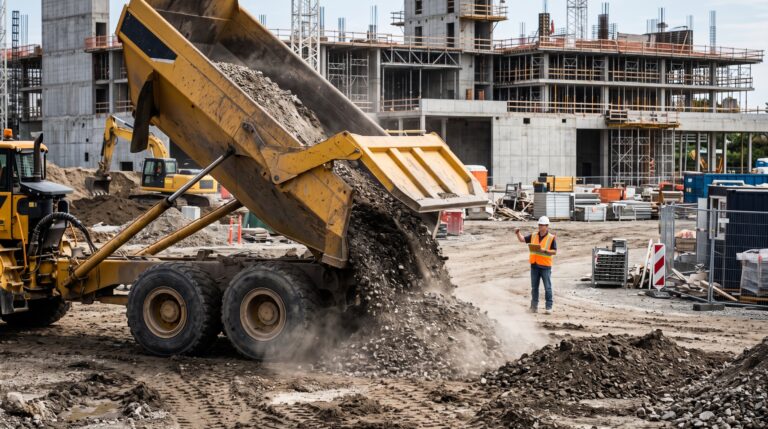
Preventive maintenance (PM) schedules are the backbone of any vehicle maintenance program, but a single generic schedule rarely fits an entire fleet. A pickup truck driven 30,000 miles a year has different service needs than a wellsite pump truck that logs most of its hours idling, or a dump truck that takes more wear per mile on a construction site.
Set triggers by whichever measure fits the asset: mileage, engine hours, calendar date, or a combination of the three. A vehicle preventive maintenance program should also build in shorter intervals for high-risk or heavy-use assets rather than defaulting to OEM minimums across the board.
This is a place where software earns its keep. Whip Around lets fleet managers set PM triggers by mileage, engine hours, or calendar date for each asset, then sends automated reminders before a service comes due, so schedules don’t depend on someone remembering to check a spreadsheet between other jobs.
4. Connect Vehicle Inspections to Defect Reporting
Inspections are where most fleets first catch a developing problem, a worn tire, a leaking hose, a cracked light lens, before it turns into a breakdown or a roadside violation. But an inspection only helps if a reported defect actually goes somewhere.
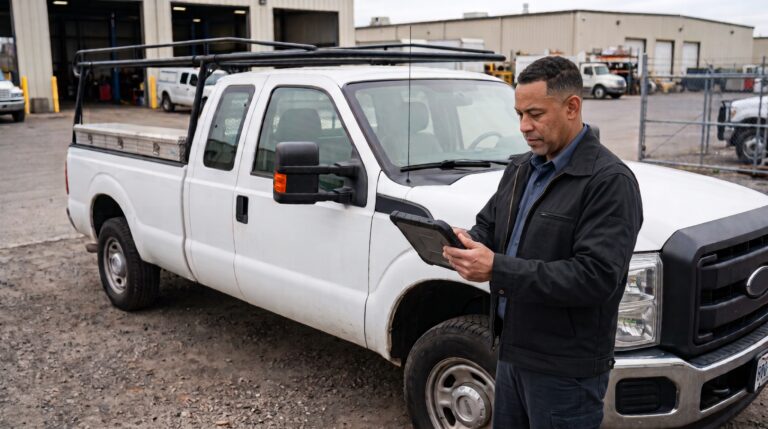
Digital DVIRs (driver vehicle inspection reports) solve the paperwork problem, but the real value is in what happens after a driver flags an issue. In Whip Around, a failed inspection item can automatically generate a maintenance work order, so a defect reported on a pre-trip inspection doesn’t sit in an inbox or a stack of paper forms waiting for someone to notice it.
A vehicle maintenance program should treat inspection and defect reporting as one connected step, not two separate ones handled by different people on different timelines.
5. Create a Clear Process for Repairs and Work Orders
Once a defect or a scheduled PM triggers a repair, the fleet needs a consistent maintenance work order process to see it through: who gets assigned, what parts are needed, what the expected turnaround is, and how the job gets marked complete.
Without a defined process, repairs stall. A truck sits in the yard for a week not because the part isn’t available, but because nobody formally assigned the job or confirmed it was finished. A documented work order workflow, even a simple one, gives fleet managers visibility into every open repair and keeps vehicles from quietly falling out of service without anyone noticing until they’re needed on a route.
6. Plan for Parts, Labor, Vendors, and Maintenance Costs
Every vehicle maintenance program needs a way to track what maintenance actually costs: parts, labor, outside vendor invoices, and downtime. Parts pricing in particular has been climbing, and fleet parts costs now make up a growing share of total maintenance spend, which is one more reason to track cost per asset rather than working off a fleet-wide average.
Track which vendors you use for which repairs, keep a running record of parts on hand versus parts on order, and set reorder thresholds for the parts your fleet burns through most. Over time, this cost data tells you which vehicles are becoming too expensive to keep and which ones are running efficiently, information that’s difficult to pull from a maintenance program that isn’t tracking cost at the individual asset level.
7. Keep Complete Maintenance and Compliance Records
Maintenance records aren’t just for your own reference. DOT audits, insurance claims, and warranty disputes all depend on being able to produce accurate, timestamped records of what service was performed, when, and by whom. A vehicle maintenance program needs a recordkeeping system that’s complete and easy to search, not a filing cabinet of paper work orders and a folder of old receipts.
That means storing inspection history, work order records, parts invoices, and compliance documents like registrations and permits in one place tied to each asset. Whip Around’s Wallet feature stores documents like registrations, insurance cards, and inspection certificates digitally, so records are available from a phone in the field instead of a binder back at the office when a roadside inspection or an audit comes up.
8. Track Performance and Adjust Your Maintenance Strategy
A vehicle maintenance program isn’t a one-time setup. It needs ongoing review against maintenance KPIs like average repair turnaround, PM compliance rate, cost per mile or per asset, and defect trends by vehicle or vehicle type.
If a specific vehicle or asset class keeps generating unplanned repairs, that’s a signal to shorten its service interval, retire it earlier, or investigate whether it’s being used outside its intended duty cycle. Reviewing this data on a set schedule, monthly or quarterly, rather than only after something breaks, is what separates a maintenance strategy that improves over time from one that stays reactive by default no matter how good the original plan was.
Vehicle Maintenance Program Template and Example
Reading about the pieces of a vehicle maintenance program is one thing. Seeing them laid out in a working document is another. Below is a simple vehicle maintenance program example you can adapt, whether you build it in a spreadsheet or set it up in fleet software.
A solid vehicle maintenance program template should include, at minimum:
- Asset details: vehicle number, VIN, make, model, year, and assigned location or cost center
- Preventive maintenance schedule: service type, interval (mileage, hours, or date), and next due date
- Inspection and defect log: date, inspector, defect description, and photo reference
- Work order tracking: assigned technician or vendor, parts used, labor hours, and completion date
- Cost fields: parts cost, labor cost, vendor invoice total, and cumulative cost per asset
- Compliance documentation: registration, insurance, and inspection certificate expiration dates
For a small fleet, this can live in a shared spreadsheet with one tab per section. For a larger fleet, or one managing more than a handful of assets across multiple sites, that same structure tends to work better inside fleet management software, where inspections, work orders, and cost data update automatically instead of requiring manual entry across several separate files.
Download a free, editable vehicle maintenance program template to use as a starting point, then adjust the fields to match how your fleet actually operates day to day.
How to Keep Your Vehicle Maintenance Program From Becoming Reactive Again
Most fleets don’t fail at building a vehicle maintenance program once. They fail at keeping it from sliding back into reactive mode six months later, when a new hire skips a step, a busy season pushes inspections to the back burner, or a spreadsheet falls out of date and nobody notices until a PM is three weeks overdue.
A few habits keep a maintenance strategy from backsliding. First, make defect reporting effortless for drivers. If reporting an issue takes ten minutes of paperwork, it won’t happen consistently, no matter how clear the policy is on paper. Second, build in automatic reminders for upcoming service rather than relying on someone to check a calendar between other tasks. Third, review your maintenance data on a set schedule, monthly or quarterly, instead of only looking at it after something breaks down.
Software helps here mainly by removing the manual steps that programs tend to lose over time: reminders that fire on their own, defects that generate work orders automatically, and records that update in real time instead of at month-end. The program itself doesn’t change based on whether it runs on paper or in software, but the amount of manual follow-through required to keep it running consistently does.
Run Your Vehicle Maintenance Program with Whip Around
Whip Around brings the pieces of a vehicle maintenance program, inspections, defect reporting, work orders, PM scheduling, cost tracking, and compliance records, into one platform instead of a collection of spreadsheets and paper forms. Drivers complete digital inspections from a mobile app, failed items can automatically create work orders, and fleet managers get a single dashboard showing PM status, open repairs, and compliance documents for every asset, vehicle or otherwise.
Because Whip Around works across trucks, trailers, heavy equipment, and other physical assets, fleets don’t need a separate system for anything that isn’t a GPS-trackable vehicle. And because it integrates with telematics providers like Geotab, Samsara, and Motive, fault codes and engine hour data can feed directly into your maintenance schedule instead of sitting in a separate app that nobody checks until something’s already wrong.
If your current process is still held together by spreadsheets, memory, and good intentions, see how Whip Around handles it end to end. Book a demo or start a free trial to see your own fleet’s vehicle maintenance program running in one place.
Frequently Asked Questions
What should be included in a vehicle maintenance program?
A complete vehicle maintenance program should include an accurate asset inventory, defined maintenance responsibilities, a preventive maintenance schedule for each vehicle, an inspection and defect reporting process, a work order workflow for repairs, cost tracking for parts and labor, and a recordkeeping system for compliance documentation.
How often should a vehicle maintenance program be reviewed?
Most fleets review performance data, PM compliance, repair turnaround, cost per asset, on a monthly or quarterly basis. The underlying schedules and workflows are worth a full review at least once a year, or any time the fleet adds new vehicle types or changes how assets are used.
What is the difference between a preventive maintenance schedule and a vehicle maintenance program?
A preventive maintenance schedule covers when service is due for each vehicle, based on mileage, hours, or time. A vehicle maintenance program is broader. It includes the PM schedule, but also the asset inventory, inspection and defect reporting process, repair workflow, cost tracking, and compliance records built around it.
Does the DOT require a vehicle maintenance program?
The DOT, through FMCSA regulations, requires driver vehicle inspection reports (DVIRs) for commercial motor vehicles over 10,000 lbs GVWR, along with proper maintenance recordkeeping, but it doesn’t mandate a specific program format. Fleets are expected to have a systematic maintenance process in place and to be able to produce records showing vehicles are maintained and safe to operate.