TL;DR: Vehicle fleet safety in construction covers both the road and the jobsite. The 10 best practices are:
- Set clear rules and owners.
- Screen drivers and review their driving records.
- Train for road and jobsite hazards.
- Require consistent inspections.
- Fix defects fast and keep PMs on schedule.
- Control backing and maneuvering.
- Secure every load.
- Coach unsafe driving early.
- Respond to every accident and near miss.
- Review safety data and fix recurring problems.
Inspections and preventive maintenance tie the whole program together.
A construction fleet manager’s day rarely stays on one road. Pickups and crew trucks run between sites, dump trucks back into crowded work zones, lowboys haul excavators down the highway, and skid steers and loaders work next to crews on foot. Each move carries a different kind of risk, and each falls under a different set of rules.
The stakes are high. According to the Bureau of Labor Statistics, transportation incidents were the most frequent type of fatal workplace event in 2024, accounting for 38.2% of all occupational fatalities. This guide explains what makes fleet safety in construction different and walks through 10 best practices for safer fleets. It also covers how to build a construction fleet safety program, and how inspections, maintenance and recordkeeping hold it all together.
What makes construction fleet safety different?
Construction fleet safety is the set of policies, inspections, maintenance practices, and training that keep a construction company’s vehicles, trailers, and equipment from causing crashes or jobsite injuries. Unlike most fleets, construction fleets must manage risk both on public roads and inside active work zones.
Working in both places is what sets construction apart. On the road, trucks fall under DOT and FMCSA rules for drivers, inspections and cargo securement. On the jobsite, the same trucks share space with heavy equipment and workers on foot, under OSHA’s construction standards. Mixed fleets add another layer. One company may run light-duty pickups, Class 8 dump trucks, trailers and dozens of pieces of off-road equipment, each with its own inspection needs. Rough terrain, heavy loads, tight backing spaces, changing site layouts and long days all add wear and risk. A safety program that only covers highway driving misses half the risk.
10 best practices for fleet safety in construction
The best practices for fleet safety in construction follow a vehicle’s whole workday, from who’s allowed to drive it to what you learn from every incident. Use them as a checklist to find the gaps in your current program. Most construction companies already do some of these well. The goal is to do all of them consistently, across every crew and every site.
1. Set clear fleet safety rules and responsibilities
Start with a written fleet safety policy. It should cover vehicle use, seat belts, phone use, speed, jobsite speed limits, backing procedures, inspections, defect reporting, load securement, and consequences for violations. Keep it practical and specific to construction. A rule like “use a spotter when backing on any active jobsite” is more useful than a general reminder to drive carefully.
Then assign owners. Someone, usually a fleet or safety manager, should own the overall program. Superintendents and foremen should enforce it on their sites, and the shop should own repair turnaround. A fleet risk assessment shows you which vehicles, routes and sites carry the most risk, so you know where your rules need to be strictest.
2. Screen drivers and review motor vehicle records
Not everyone who can drive a pickup should operate a loaded dump truck or tow a lowboy. Review motor vehicle records (MVRs) before hiring and at least once a year after that, and set clear standards for what disqualifies someone from driving company vehicles. For drivers of commercial motor vehicles, FMCSA’s driver qualification rules under 49 CFR Part 391 require a qualification file. That file includes MVR reviews, a road test or equivalent, and a current medical certificate.
Match drivers to vehicles. Document which employees are authorized to drive which vehicle classes and operate which equipment, and make sure they meet CDL requirements where those apply. Clear authorization stops the common jobsite shortcut of “whoever is closest moves the truck.”
3. Train drivers for both road and jobsite hazards
Road training alone isn’t enough for construction crews. Drivers also need to know how to:
- enter and exit active work zones
- drive on unpaved and uneven ground
- work around heavy equipment
- watch for workers on foot
- adjust as site layouts change
Cover blind spots on large trucks and equipment, safe speeds on site, and how to communicate with equipment operators and spotters.
Keep training ongoing and short. Toolbox talks are a natural fit for fleet safety topics, such as backing, load securement, winter driving or a recent near miss. When you roll out a new vehicle type or start work on a site with unusual hazards, add a targeted session before crews start driving.
4. Require consistent pre-trip and post-trip inspections
Inspections are the first line of defense for every vehicle and machine. OSHA’s construction standard for motor vehicles, 29 CFR 1926.601, requires vehicles in use to be checked at the start of each shift. The check makes sure brakes, tires, lights, horn, steering and other key parts are in safe operating condition. For CMVs, FMCSA’s DVIR rule adds defect reporting and recordkeeping requirements.
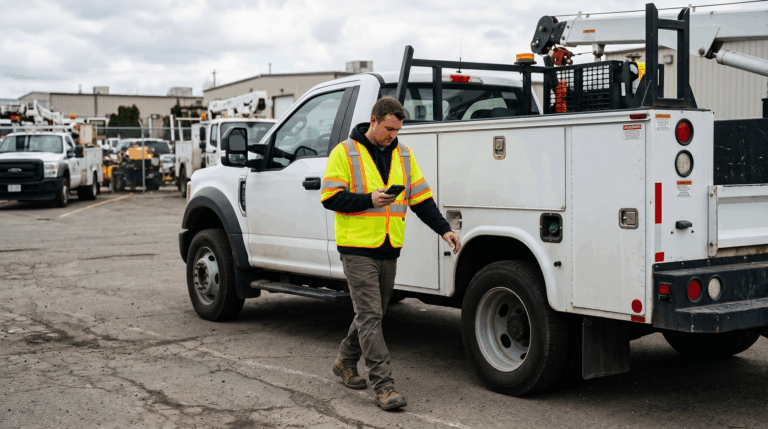
Standardize the checklist by asset type. A DOT pre-trip inspection checklist works for trucks and trailers. A construction equipment inspection checklist covers excavators, loaders and skid steers. With digital fleet inspection software, drivers and operators complete inspections on a phone and attach photos, and managers see exactly who inspected and who skipped.
5. Fix defects quickly and keep preventive maintenance on schedule
An inspection only improves safety if the problems it finds get fixed. Set a clear rule for safety-critical defects, such as brakes, steering, tires, lights and hydraulics: the vehicle or machine is tagged out until it’s repaired. For everything else, set a deadline and track it. Every defect should end one of three ways: repaired, deferred with a documented reason, or confirmed as not needing repair. A clear defect resolution process keeps reports from disappearing between the jobsite and the shop.
Preventive maintenance catches wear before it turns into a failure. Construction assets work hard, often in dust, mud and extreme temperatures, so service intervals should reflect how much each asset is actually used. Schedule preventive maintenance for construction equipment by engine hours and trucks by mileage. Stay on top of DOT annual inspection requirements for every CMV in the fleet.
6. Reduce backing and maneuvering risks on jobsites
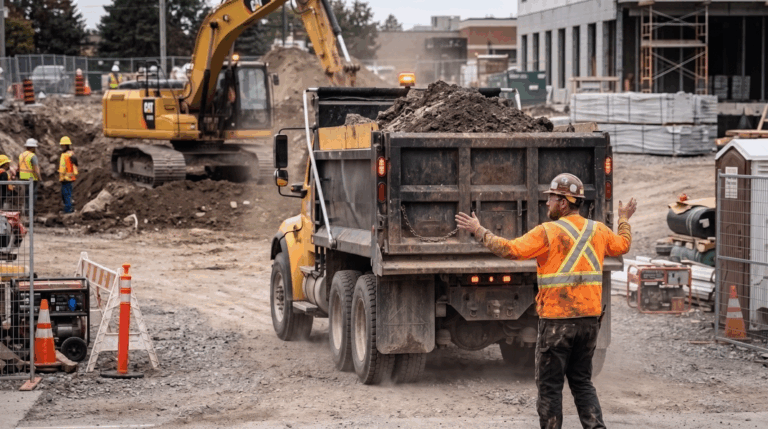
Backing is one of the most dangerous moves on any construction site. Large trucks and equipment have big blind spots, sites are noisy, and workers on foot are often focused on their own tasks. Under 29 CFR 1926.601, OSHA requires a vehicle with an obstructed rear view to have a working reverse signal alarm, or to back up only when an observer signals it’s safe. Earthmoving equipment must meet similar requirements under 29 CFR 1926.602.
Go beyond the minimum:
- Plan site traffic flow so trucks back up as little as possible.
- Mark walkways for workers on foot.
- Use trained spotters with agreed hand signals.
- Require drivers to get out and look when in doubt.
- Add backup cameras where practical.
Include backup alarms and cameras on every inspection checklist so a broken one gets caught before the shift starts.
7. Secure trailers, equipment, tools, and materials properly
Unsecured loads put the driver and everyone else on the road at risk. A skid steer that shifts on a trailer, or a pallet of materials that slides off a flatbed, can cause a serious crash. FMCSA’s cargo securement rules include specific requirements for heavy equipment. Every driver who hauls equipment should be trained on DOT tie-down requirements for heavy equipment, including working load limits and tie-down counts.
Make securement part of the inspection. Drivers should check hitches, safety chains, trailer lights, brakes, ramps and tie-downs before leaving the yard, and again after the first few miles. Store or strap down tools and materials in pickup beds and service bodies so nothing becomes a projectile in a hard stop.
8. Monitor unsafe driving patterns and coach drivers early
Telematics data shows patterns you’d never see from the office: harsh braking, hard cornering, speeding, rapid acceleration and long idle times. Combine that with inspection completion rates and incident history to spot drivers who need attention before a crash happens. The goal is early coaching, not punishment.
Keep coaching specific and timely. Review a driver’s data with them, explain the risk, and agree on what needs to change. Recognize drivers with strong records, too. Simple steps to boost driver accountability often do more than another policy memo. Examples include making inspection completion visible and following up on every skipped inspection.
9. Create a clear accident and near-miss response process
Every crew should know exactly what to do after an accident: secure the scene, call for help if needed, protect other workers, take photos, and report to a supervisor immediately. Keep a simple accident kit and instructions in every vehicle. A written fleet accident prevention program ties this response process to your broader prevention efforts.
Treat near misses as free lessons. A truck that almost backed into a worker, or a load that shifted without falling off, tells you where your next accident is likely to happen. Make near-miss reporting easy and blame-free, then find the root cause. Was the vehicle inspected? Were there open defects? Was the site layout or spotter setup the problem? Pull the vehicle’s inspection and maintenance history as part of every investigation.
10. Review fleet safety data and correct recurring problems
Construction fleet safety data often lives in many places: inspection forms in truck cabs, repair notes in the shop, telematics in a separate portal, and incident reports in email. Bring it together and review it monthly with superintendents and the shop. Look for repeat defects on the same assets, sites with low inspection completion, drivers with recurring events, and PMs that keep slipping.
Then fix the process, not just the symptom. If one model of truck keeps failing brake inspections, adjust its PM interval. If one site keeps having backing incidents, change the traffic plan. Fleet reporting dashboards make these reviews faster because the trends are already visible instead of buried in spreadsheets.
How to build a construction fleet safety program
A construction fleet safety program turns the best practices above into a routine that runs every day, on every site, without depending on one person’s memory. Start with an honest look at where you are:
- which vehicles and equipment you run
- who drives them
- how inspections and repairs are handled today
- where incidents and near misses have happened
Use that to write or update your policy, assign owners, and set clear standards for inspections, defect repair, PM compliance and training.
Then make it measurable. Track a short list of metrics, such as inspection completion rate, time to close safety-critical defects, PM compliance, preventable incidents and roadside inspection results. Review them monthly, share the results with crews, and adjust the program as your fleet, sites and work change. Construction fleets that also manage equipment utilization across jobsites can use the same data to schedule maintenance during natural gaps, so safety work doesn’t compete with production.
The role of inspections and preventive maintenance in fleet safety
Inspections and preventive maintenance are where fleet safety gets hands-on. Policies and training shape behavior, but a vehicle with worn brakes or a machine with a hydraulic leak is dangerous no matter how well its operator was trained. In construction, equipment works in harsh conditions and moves between sites constantly, so mechanical problems develop quickly. Daily inspections catch what has changed since yesterday. Preventive maintenance catches the wear that builds up over weeks and months.
The two only work together if the handoff between them is reliable. A defect an operator marks on a paper form has to get from the jobsite to the shop, be reviewed, become a work order, and get closed out. Each step is a chance for the defect to get lost. Whip Around closes that gap by turning failed inspection items into work orders automatically, with photos and notes attached. It also schedules PMs by engine hours, mileage or calendar date for every truck, trailer and machine. Teams that add AI-powered review can catch defects in inspection photos that a busy reviewer might miss. Our look at AI vs. manual equipment inspections on a construction site explores this in more detail.
Construction fleet safety compliance and recordkeeping
Construction fleets usually answer to more than one regulator. FMCSA rules apply to commercial motor vehicles used in interstate commerce, generally those over 10,001 pounds GVWR. Those rules cover driver qualification, hours of service, DVIRs, annual inspections, cargo securement and maintenance records. OSHA’s construction standards cover vehicles and equipment operating on the jobsite, including shift-start checks, backup alarms and operator safety. State DOT rules may add requirements for vehicles that stay within one state.
Good recordkeeping is how you prove compliance. Keep driver qualification files, inspection reports, maintenance and repair records, annual inspection reports, accident registers and training records organized and easy to find. Poor vehicle maintenance records can also hurt your CSA scores and make a DOT safety audit far more painful. Fleet compliance software stores these records digitally, so you can pull them up in minutes instead of searching filing cabinets across multiple yards.
Use fleet management software to improve safety and accountability
Vehicle fleet safety in construction depends on consistency across crews, sites and asset types. Paper forms and disconnected systems make that hard, because defects get lost, PMs slip, and nobody can see the whole fleet at once. Fleet management software gives every driver, operator, mechanic and manager the same view of what’s safe to operate, what needs repair, and what’s due for service.
Whip Around is built for mixed construction fleets. Drivers and operators complete customizable inspections on their phones, failed items become work orders automatically, PMs run on engine hours and mileage, and every record is stored for audits. Integrations with telematics providers like Geotab, Samsara and Motive bring fault codes and engine hours into the same workflow. Learn more about fleet management software for construction, or book a demo or start a free trial to see how it can support your construction fleet safety program.
FAQs about construction fleet safety
What should a construction fleet safety program include?
A construction fleet safety program should include:
- a written safety policy
- driver screening and MVR reviews
- road and jobsite training
- standardized inspections
- a defect repair process
- preventive maintenance
- backing and load securement procedures
- accident and near-miss reporting
- regular review of safety data
How often should construction vehicles be inspected?
Under OSHA 29 CFR 1926.601, vehicles in use on construction sites must be checked at the start of each shift. Under FMCSA rules, commercial motor vehicles also need a DVIR when defects are found and a periodic inspection at least once every 12 months.
Who is responsible for fleet safety in a construction company?
A fleet or safety manager should own the program, but responsibility is shared:
- Drivers and operators handle inspections and safe operation.
- Superintendents and foremen enforce the rules on site.
- Mechanics make repairs on time.
- Leadership provides resources and holds people accountable.
How can construction companies reduce preventable fleet accidents?
Focus on the basics: consistent inspections, fast defect repair, on-time preventive maintenance, spotters and site traffic plans for backing, proper load securement, and early coaching based on telematics data. Investigate every accident and near miss to fix the root causes.
What records should construction fleets keep for safety and compliance?
Keep driver qualification files, MVR reviews, inspection reports and DVIRs, maintenance and repair records, annual inspection reports, training records, and an accident register. Store them digitally so they’re easy to find during audits or investigations.
Does OSHA regulate construction fleet vehicles?
Yes, on the jobsite. OSHA’s construction standards, including 29 CFR 1926.601 and 1926.602, cover motor vehicles and earthmoving equipment operating on construction sites. On public roads, FMCSA and state DOT rules are the main regulations for commercial vehicles.