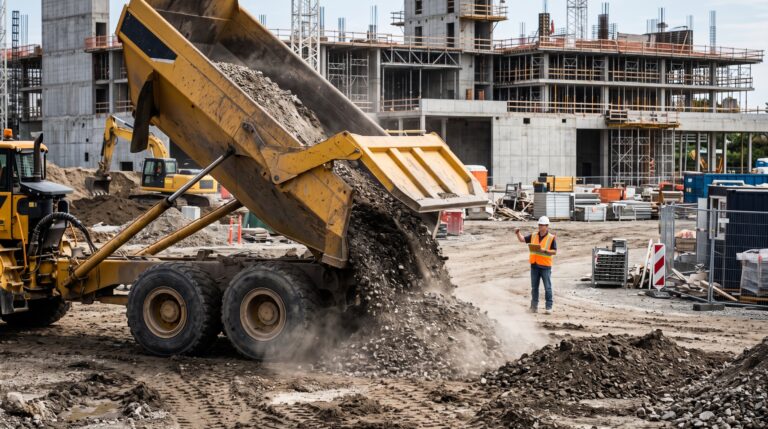
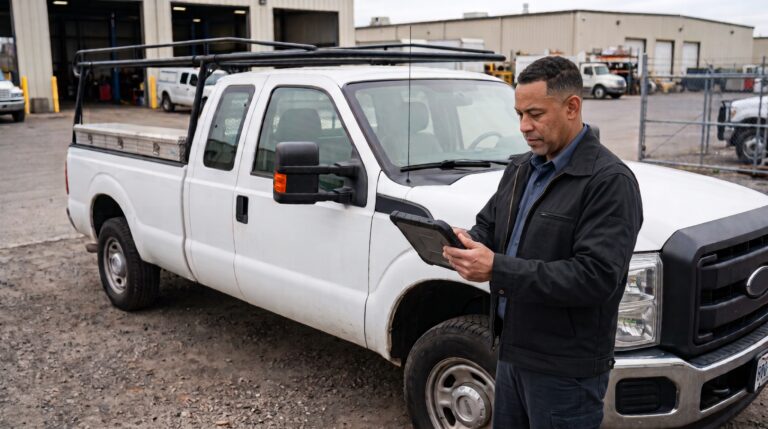
The excavator in front of him is still caked in yesterday’s mud when the operator starts his pre-shift walk-around. It’s 6:40 a.m., the light is flat, and this isn’t even his usual machine — the night crew ran it last, and nobody logged how it handled. He’s checking for anything obviously wrong: a leak, a crack, something loose. What he’s not going to catch, in that light, on that surface, on a machine he didn’t run yesterday, is a hairline weld crack starting at the base of the boom. That’s not a reflection on him. It’s what happens when inspection quality depends on site conditions, equipment familiarity, and how many machines someone has already checked that morning, on a job site where the operator, the crew, and even the equipment itself can be different from one shift to the next.
AI-assisted equipment inspection doesn’t take the operator out of that walk-around, but it changes what gets caught before a small issue turns into a stalled crew or an OSHA finding. This article covers what actually changes operationally when AI enters a construction equipment inspection workflow, where job site conditions make manual review especially unreliable, and where a person on-site still has to make the call.
What Is an AI Equipment Inspection, and How Is It Different on a Construction Site Than in a Trucking Fleet?
AI equipment inspection software applies computer vision to the photos captured during a pre-shift or post-shift equipment check, flagging defects and anomalies automatically instead of relying only on an operator’s pass/fail answer on a checklist. It applies that same review standard to every inspection, on every machine, regardless of who’s running it that day.
Construction equipment inspections work differently than the DVIR process most trucking fleets know. Heavy equipment like cranes, aerial lifts, and earthmoving machinery falls under OSHA 1926, not FMCSA, and a competent person still has to sign off on certain equipment before each shift. Add in rented and leased machines with no consistent operator history, and outdoor job site conditions that make a quick visual scan harder to begin with, and construction inspection has a different set of failure points than a trucking fleet’s daily DVIR.
That distinction matters for who’s actually responsible for the inspection, too. On most job sites, the operator running the equipment that shift is responsible for the pre-shift check, but the equipment or safety manager overseeing the site is the one accountable for the record if a defect gets missed and something goes wrong later. AI-assisted review doesn’t change who signs off — it changes how much evidence backs up that sign-off, and how consistent that evidence is across every operator touching the fleet.
Why Construction Sites Make Manual Inspection Especially Unreliable
Inspection fatigue is a problem on any fleet. On a construction site, a handful of conditions specific to the job site make manual review even less consistent.
1. Site Conditions Work Against Visual Inspection
Mud, dust, and debris cover the exact surfaces an inspector needs to see clearly, and pre-shift checks often happen at dawn or dusk when light is worst. A hairline weld crack, a slow hydraulic seep, or worn rigging hardware is hard enough to spot on a clean machine in good light. On a job site, it’s often not visible at all until it’s already a bigger problem, and by the time it is visible, it’s usually a repair rather than a five-minute fix.
Weather compounds this. A quick walk-around in the rain, in a dust storm kicked up by other equipment on-site, or in the last few minutes of usable daylight isn’t the same inspection as one done in a controlled shop environment, even when the checklist and the time spent are identical.
2. Equipment Changes Hands Constantly
A truck driver typically runs the same assigned vehicle every day and develops a feel for how it should sound and handle. Heavy equipment on a job site doesn’t work that way. Machines move between shifts, between operators, and between subcontractor crews, and rented or leased equipment often has no consistent operator relationship at all. Nobody inspecting it today necessarily knows what “normal” looked like yesterday, which means the baseline every inspection is supposed to compare against is often missing entirely.
This is especially true on larger projects where equipment gets shared across multiple subcontractors doing different work with the same machine over the course of a week. Each new operator is effectively inspecting a stranger.
3. Inspection Standards Vary by Crew and Subcontractor
On a multi-sub job site, what one crew considers worth flagging, another treats as routine wear. Without a consistent standard applied across every operator and every subcontractor touching that equipment, the same defect can get reported by one crew and waved through by the next, sometimes within the same week on the same machine.
What Actually Changes When AI Enters the Equipment Inspection Workflow
AI inspection review doesn’t replace the pre-shift walk-around. It changes what happens to the photos and data that walk-around already produces.
Instead of relying solely on an operator’s checklist answer, AI-assisted review analyzes the actual photo captured during the inspection, catching visible defects even when the checklist item was marked as passed. That could mean a hydraulic leak beginning at a hose fitting on an excavator boom, a hairline weld crack on a bucket or frame, or worn outrigger pads and rigging wear on a crane, all things that are technically visible in a photo but easy to miss in a fast visual scan on a machine that’s rarely clean enough for a quick look to tell the full story.
The mechanics are straightforward: an operator photographs the equipment during the inspection they’re already required to do, the photo gets analyzed against a defect-detection model trained to spot the kinds of issues that show up on heavy equipment, and anything flagged gets surfaced to the fleet or safety manager alongside the operator’s own checklist responses. Nothing about the operator’s workflow changes. What changes is what happens after the photo is taken.
Because the same detection standard applies regardless of which crew, subcontractor, or rental operator is running the equipment that day, fleets get a level of consistency across a rotating pool of operators that manual review can’t reliably match. And because AI-assisted review can be tied to inspection history over time, a recurring issue on a specific machine can surface as a pattern, even as that machine moves between job sites, crews, and operators who have no way of knowing what it looked like last week.
That history piece matters more on a construction fleet than it might on a fleet of assigned trucks. A single inspection is a snapshot of one operator’s judgment on one morning. Tying that snapshot to the equipment’s inspection history, rather than to whichever operator happened to be running it, is what turns “a crack was flagged once” into “this excavator has had three flagged hydraulic issues in six weeks across two different crews,” which is a very different maintenance decision.
This is where AI Inspections Pro fits into a construction inspection program: it reviews the photos captured during a driver or operator’s existing inspection workflow and applies that same standard across the fleet, whether the equipment is owned, leased, or a rental that showed up on-site yesterday.
What Still Requires a Person on the Jobsite
AI inspection software is a review layer on top of the walk-around, not a replacement for the person standing next to the machine.
Sounds, smells, and feel stay entirely in the operator’s domain. A grinding noise from a hydraulic pump, a fuel smell, or a control response that feels off are things no photo-based review can pick up. Context matters too: an operator knows if a machine handled differently after working uneven ground, or if a noise started after a specific load, in a way that a photo reviewed after the fact simply doesn’t capture.
Regulatory sign-off matters here as well. Under 29 CFR 1926.1412, cranes and derricks used in construction still require a visual inspection by a competent person before each shift, and deficiencies have to be corrected before the equipment goes back into service. AI-assisted review supports that judgment call with more consistent photo evidence; it doesn’t substitute for it. The same principle applies to aerial lifts under 1926.453 and to earthmoving and material handling equipment under 1926.602, a person is still the one making the go or no-go call.
For the underlying inspection requirements by equipment type, Whip Around’s heavy equipment inspection checklist and OSHA guide and construction equipment inspection checklist cover what to check and how often, machine by machine.
The Cost of What Manual-Only Inspections Miss on a Job Site
Equipment downtime on an active construction site doesn’t just cost repair dollars. It stalls the crew, the schedule, and every trade waiting on that machine. Industry estimates put the cost of heavy equipment downtime at $450 to $760 per hour depending on the machine, and unplanned repairs typically run 3 to 9 times more than the same job handled as planned maintenance. A weld crack or hydraulic leak caught two weeks late because the light was bad and the machine was covered in mud is a textbook example of a planned fix turning into an unplanned one, at a much higher cost per hour of downtime.
Idle equipment adds to that math. Industry estimates suggest up to 30% of equipment time on a construction project is idle rather than working, and an unplanned breakdown that pulls a machine out of rotation mid-project only extends that idle stretch, often on a rental where the daily cost keeps running whether the machine is working or parked waiting on a part.
There’s a compliance cost too. A missed pre-shift defect on equipment governed by OSHA 1926, whether it’s a crane, an aerial lift, or an excavator, isn’t only a maintenance gap. It’s a documentation gap if an inspector or a GC’s safety audit asks how that inspection was conducted and what the record shows.
How Whip Around’s AI Inspections Pro Fits a Construction Fleet
AI Inspections Pro reviews the photos captured during an operator’s existing pre-shift or post-shift inspection, flagging defects and anomalies that a rushed or unfamiliar check might miss, and applies that same standard whether the equipment is owned, leased, or shared across subcontractor crews. Rather than relying only on a checklist answer, it reviews the actual photo evidence tied to each inspection, cutting down the review burden on equipment and safety managers while making the record itself more consistent.
That flagged defect data flows directly into Whip Around’s fleet maintenance software, so an issue caught by photo review becomes a work order the same way an operator-reported defect would, without someone having to comb through inspection photos manually to catch it first. It also strengthens the audit trail behind Whip Around’s fleet compliance software, since flagged defects are backed by photo evidence rather than a checklist mark alone, if a GC safety audit or OSHA inspector asks how an issue was identified.
For a fleet running a mix of owned equipment, long-term leases, and short-term rentals, that consistency matters more than it would on a fleet of assigned company trucks. The equipment itself doesn’t have a memory of its own condition, and neither does a rotating pool of operators. The inspection record does, as long as every inspection is being reviewed to the same standard, regardless of whose name is on the checklist that day.
General Insulation’s inspection and compliance journey with Whip Around shows what this looks like on a construction fleet in practice: moving inspections from a formality drivers and operators completed to close out a checklist, to a process the business could actually rely on to catch real issues. For a broader look at where AI fits across construction fleet operations beyond inspections, see Whip Around’s coverage of AI for construction fleet management.
Building a Construction Inspection Program That Uses AI Where It Helps Most
The construction fleets getting the most out of AI inspection software aren’t asking it to make every call, and they’re not treating it as a substitute for the walk-around itself. A few practices separate the fleets seeing real results from the ones adding noise to an already busy inspection process:
- Let AI handle photo review and flagging, not final go/no-go decisions. AI is strongest at catching visible defects consistently across a rotating pool of operators and equipment. Whether a piece of OSHA-regulated equipment gets pulled from service still benefits from a competent person reviewing the flagged item in context.
- Route flagged items straight into the maintenance workflow. A defect AI catches only helps if it turns into a work order automatically, the same way an operator-reported issue would, rather than sitting in a report nobody checks between job sites.
- Track catch rate across the whole fleet, not just owned equipment. Comparing defect catch rates before and after adding AI review, including on rented and leased machines, is how a construction fleet confirms the tool is surfacing issues that were actually getting missed.
AI and Manual Inspection Aren’t Competing on a Construction Site Either
The honest answer here is the same one that applies fleet-wide: AI doesn’t replace the operator’s walk-around, it closes the specific consistency gap that mud, low light, subcontractor turnover, and constant equipment handoffs create on a jobsite. The sounds, smells, and on-site context that flag a real problem still come from the person standing next to the machine, and the sign-off on OSHA-regulated equipment still belongs to a competent person, not a piece of software. What changes is what happens to what that person already sees and photographs, and whether it gets caught before it becomes a stalled crew or an OSHA finding, regardless of which operator, crew, or rental machine is involved that day.
If your equipment inspection program still depends entirely on how familiar an operator is with a given machine on any given morning, it’s worth seeing what AI-assisted review adds to a construction fleet management program. Book a demo to see AI Inspections Pro in action, or start a free trial to try it with your own equipment.