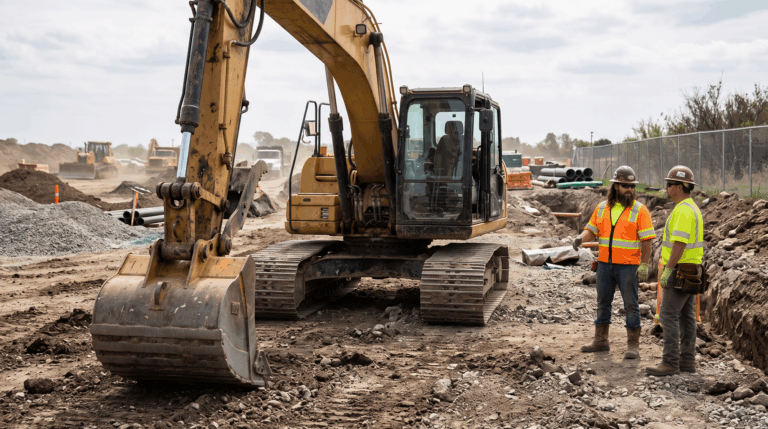
When an excavator goes down on a jobsite, the problem goes beyond one broken machine. The crew waits, the schedule slips, and someone starts calling rental yards. Most advice on how to reduce equipment downtime is written for factory floors and production lines. Construction fleets face a different reality: machines spread across sites, operators running walkarounds in the dirt, and defects that get noted on paper and then forgotten.
This guide is built for that reality. It covers what equipment downtime really costs a construction fleet and why machines go down. It also gives you a practical playbook to catch problems early, fix them faster and keep equipment working.
What counts as equipment downtime, and what it really costs
Equipment downtime is any period a machine can’t work, whether it’s planned for service or unplanned because of a breakdown. For construction fleets, the real cost of downtime is the hours a machine is down multiplied by the hourly cost of idle crews, rental replacements and delayed project work, plus the repair bill itself.
Planned downtime is the service window you schedule: an oil change on a Friday afternoon or a hydraulic service between jobs. Unplanned downtime is the breakdown that happens mid-shift, and it costs far more because everything around the machine stops with it. Picture a dozer down for 16 hours: the repair is only part of the bill. You’re also paying an operator and support crew to wait, covering a rental, and possibly absorbing penalties on a job that slips. Reducing equipment downtime means shifting as much of it as possible from unplanned to planned.
Why construction equipment goes down: the common causes
Most heavy equipment downtime traces back to a handful of operational gaps, not bad luck:
- Missed inspections: Operators skip or rush the daily walkaround, so leaks, worn tracks and cracked hoses go unnoticed.
- Deferred defects: A problem gets reported but sits for days or weeks because nobody owns the follow-up.
- Parts delays: The shop learns about a problem only after the machine fails, then waits on parts.
- Operator misuse: Overloading, poor warm-up habits or running through warning lights speeds up wear.
- No maintenance schedule: Service happens when someone remembers, not when the machine needs it.
Notice that most of these come down to information. The defect existed. Someone just didn’t see it, record it or act on it in time.
How to reduce equipment downtime: a construction fleet playbook
The fleets that keep machines running treat downtime as a process problem. Each step below closes one of the gaps above, and together they form a loop: inspect, schedule, repair, measure.
Catch defects early with daily digital inspections
The daily inspection is your first line of defense against equipment downtime. A walkaround that catches a weeping hydraulic fitting today prevents a blown hose next week. On the jobsite, OSHA material handling and earthmoving equipment rules already require working brakes, seatbelts and backup alarms, so the daily check matters for safety and compliance too.
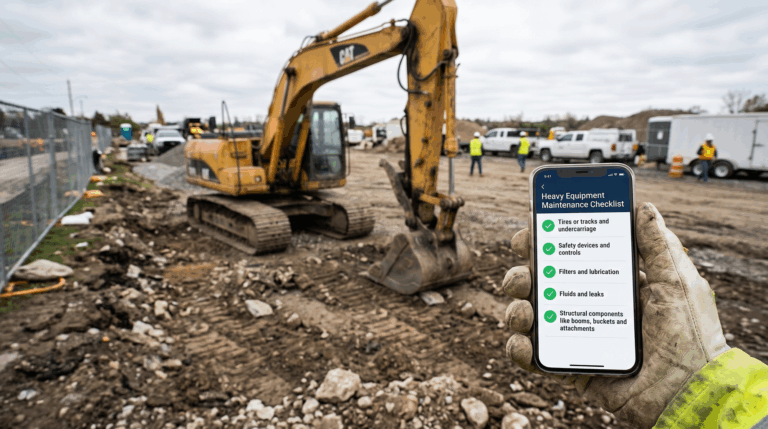
Paper makes inspections easy to skip and hard to verify. Digital inspections on a phone add required photos, timestamps and location, so managers know each walkaround actually happened. For more on getting crews to buy in, see these heavy equipment inspection best practices.
Move from reactive to preventive maintenance
Reactive maintenance means fixing machines after they fail, which guarantees the most expensive kind of downtime. Preventive maintenance replaces wear items and services components on a set schedule, turning surprise breakdowns into short, planned service windows.
Schedule PMs by engine hours, not the calendar alone. A loader that ran double shifts all month needs service sooner than one parked at the yard. Hours-based triggers match service to how hard each machine actually works. For more ways to tighten the shop side, read how to reduce fleet maintenance downtime.
Close the gap from defect to work order to repair
Finding a defect is only half the job. The time between “reported” and “repaired” is where most avoidable downtime hides. If a failed inspection item has to be retyped, emailed or walked to the shop, it can sit for days.
Close that gap by connecting inspections directly to maintenance. When a failed item automatically becomes a work order, the shop sees it right away, orders parts and schedules the fix before the machine breaks down on the job. The same logic applies whether you’re running excavators in a city or managing fleet downtime in the field at remote sites.
Use your data to prioritize, telematics and all
Every inspection, work order and fault code tells you something. Look for the machines with repeat defects, the sites with the slowest repair times and the components that fail most often. That’s where to focus your PM budget and your replacement planning.
If you already run telematics, put that data to work too. Engine hours and fault codes from Geotab, Samsara or Motive can feed your maintenance workflows, so you don’t need to replace systems you already trust. The right equipment maintenance software should connect to the telematics you have, not force you to switch.
Build downtime out of your routine, not just your repairs
Fixing machines faster helps. Building a routine where problems get caught and handled the same way every day, at every site, helps more. Whip Around gives construction fleets that consistency: the same digital inspection, the same automatic work order and the same service history for every asset, whether it’s a dump truck, a skid steer or a forklift.
Indiana Sign & Barricade, a traffic control and pavement marking company with nearly 100 pieces of equipment, saw what that consistency does. After pairing Whip Around with Geotab, ISB cut defect resolution from 90+ days to around 2 days, avoided 9,000 hours of equipment downtime and saved $100,000 in one year. “With Whip Around, our mechanics love the instant feedback they get on inspections and repairs,” said fleet manager Scott Fischer. See how ISB cut downtime.
Turn uptime into a number you track
You can’t reduce what you don’t measure. Start with two metrics: equipment availability (the share of scheduled hours each machine was ready to work) and defect resolution time (how long it takes to go from a reported defect to a completed repair). Review both monthly by asset, site and machine type.
Those numbers also protect you during audits and customer reviews. For vehicles under DOT jurisdiction, FMCSA inspection, repair and maintenance records rules require systematic maintenance and documented records. Whip Around fleet maintenance keeps inspection, work order and service data in one place, with reporting that shows where downtime is shrinking and where it isn’t.
Ready to spend less time waiting on repairs? Whip Around Fleet Maintenance connects inspections, defects and preventive service so your construction equipment spends more time working. Book a demo or start a free trial.
Frequently asked questions
What is equipment downtime?
Equipment downtime is any period a machine isn’t available to work, whether it’s planned for service or unplanned because of a breakdown. For construction fleets, it’s usually measured in hours lost plus the cost of idle crews and delayed jobs.
How do you calculate the cost of equipment downtime?
Multiply the hours a machine is down by its cost per hour. Include idle labor, rental replacements and delayed project revenue along with the repair bill.
What is the best way to reduce unplanned equipment downtime?
Catch defects early with consistent daily inspections, move from reactive to preventive maintenance on an hours-based schedule, and close the gap from reported defect to work order to repair.
How does preventive maintenance reduce downtime?
Preventive maintenance replaces wear items and catches small faults on a set schedule before they fail in the field. That turns unplanned breakdowns into planned, shorter service windows.