A trucking fleet running digital pre-trip and post-trip inspections across a hundred trucks generates thousands of DVIR photos a week. No compliance team, no matter how careful, can manually review that volume against every defect type that matters, tire wear, cracked lenses, fluid leaks, coupling damage, on every single photo. That’s the specific gap AI DVIR review is built to close. This article walks through what actually happens when AI reviews a DVIR inspection photo, step by step, what kinds of defects it can catch on a commercial truck, and why that matters for trucking fleets carrying real compliance exposure under FMCSA rules.
What Does “AI Review” of a DVIR Photo Actually Mean?
AI review of a DVIR inspection photo means a computer vision model analyzes the image captured during a driver’s inspection to detect visible defects such as damage, wear, leaks, or missing components, and flags them automatically for follow-up. It’s not a replacement for the driver’s inspection. It’s a second layer of review applied to the same photo evidence the driver already captured, catching what a quick visual scan might miss.
The Photo Review Process Step by Step
Step 1: Photo capture during the driver’s inspection
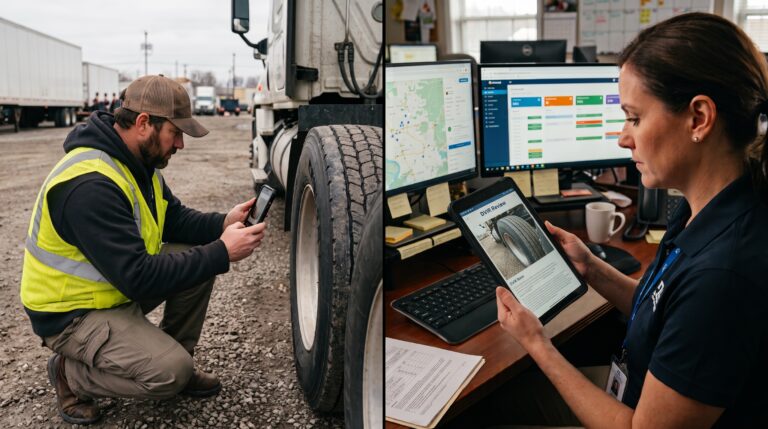
The process starts with the driver’s own eDVIR workflow. As the driver walks through pre-trip or post-trip checks, they capture photos of specific components, tires, lights, fluid lines, coupling points, the same way they would for a standard digital inspection.
Step 2: Automated image analysis against known defect patterns
Once a photo is captured, the AI model analyzes it against trained defect patterns, comparing what it sees to known signatures of damage, wear, or abnormal conditions. This happens automatically in the background, without adding a manual review step to the driver’s workflow.
Step 3: Defect flagging and severity classification
When the analysis identifies a likely issue, it flags the item and classifies it by severity, distinguishing a cosmetic scratch from a defect that could affect roadworthiness. This step is what determines how urgently the flagged item needs attention.
Step 4: Defect-to-work-order routing
A flagged defect doesn’t just sit in a report. It routes into the fleet’s maintenance workflow as a work order, the same way a driver-reported defect would, so the finding turns into action instead of a note in a file.
Step 5: Documented, searchable record for compliance
Every step, the original photo, the AI flag, the severity classification, and the resulting repair, is stored together as part of the DVIR’s compliance record. That record is what a fleet produces if a DOT auditor or roadside inspector asks how a defect was identified and resolved.
What Kinds of Defects Can AI Photo Review Catch for Trucking Fleets?
For commercial trucking specifically, AI photo review is trained to catch the categories of defects most tied to roadworthiness and out-of-service risk.
Tire and wheel-end issues
Uneven or excessive tread wear, visible sidewall damage, and wheel-end leaks are among the most common findings in roadside inspections, and they’re exactly the kind of defect that’s technically visible in a photo but easy to underweight in a fast visual check.
Lighting and reflector defects
Cracked lenses, non-functioning lights, and missing or damaged reflectors are frequent DOT violation points. Photo analysis can catch a hairline crack or a dim lens that a driver glancing at a light in daylight might miss entirely.
Visible fluid leaks and fittings
Fluid stains, loose fittings, and visible leaks around the engine or undercarriage are flagged the same way, often before they’ve grown large enough to be an obvious problem during a quick walk-around.
Frame, coupling, and trailer connection damage
Damage around the fifth wheel, kingpin, or frame rails carries serious safety implications for a combination vehicle. These are high-consequence components where catching an early crack or wear pattern matters more than almost any other inspection point.
Why This Matters for Trucking Compliance Specifically
The FMCSA requires DVIRs for all commercial motor vehicles over 10,000 lbs GVWR, and inspection-related violations remain among the leading contributors to CSA score points. For a trucking fleet, an inconsistent or incomplete inspection record isn’t just an internal quality issue, it’s direct exposure during a roadside inspection or a compliance review. AI photo review adds a layer of consistency that supports the same compliance standard across every terminal and every driver, regardless of experience level or how busy a particular yard is that day.
How Whip Around’s AI Inspections Pro Powers This Process
This is exactly the workflow behind AI Inspections Pro, Whip Around’s add-on for automated inspection photo review. It analyzes photos captured during a driver’s DVIR, flags defects and anomalies a manual review might miss, and generates a consistent, auditable record tied to each inspection. Flagged defects route directly into Whip Around’s fleet maintenance software as work orders, keeping the finding and the repair connected instead of living in separate systems.
That combination of photo evidence, AI flagging, and documented resolution feeds directly into Whip Around’s fleet compliance software, giving trucking fleets a record built specifically for the kind of scrutiny a trucking and delivery operation faces during a DOT audit or roadside review. For a broader look at where this technology is headed, Whip Around’s coverage of AI’s role in fleet maintenance and compliance covers the wider shift this process is part of.
Building Trust in an AI-Reviewed Inspection Process
Fleets adopting AI photo review understandably want to know it’s reliable before leaning on it for compliance. A few things make that trust reasonable.
Human review still confirms flagged items before repair
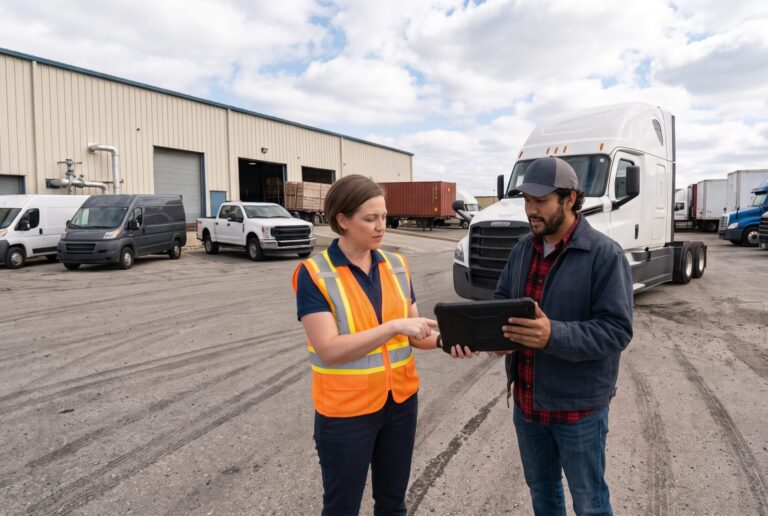
AI flags a likely defect. A technician or fleet manager still reviews the flagged photo before a repair is authorized, which keeps a person in the loop on the judgment call while removing the burden of reviewing every single photo manually.
Photo evidence backs up every flagged defect
Because every flag is tied to the actual photo that triggered it, a fleet can show exactly what was seen and why it was flagged, rather than relying on a checklist entry with no supporting evidence.
Consistent standards across every terminal and driver
The same detection criteria apply everywhere the system runs, which means a defect gets flagged the same way whether it’s photographed at a home terminal or an out-of-state drop yard, something manual review alone can’t guarantee at scale.
What AI Photo Review Actually Adds to a Trucking Fleet’s Inspection Process
AI DVIR review doesn’t change what a driver does during an inspection. It changes what happens to the photo evidence after it’s captured, applying a consistent, trained eye to every image instead of relying entirely on however alert a driver is in that moment. For trucking fleets managing real compliance exposure across multiple terminals, that consistency is often the difference between a defect caught early and one that surfaces later as a roadside violation.
If your fleet’s inspection photos are being captured but not consistently reviewed, it’s worth seeing what AI-assisted review adds to that process. Book a demo to see AI Inspections Pro in action, or start a free trial to try it with your own fleet.