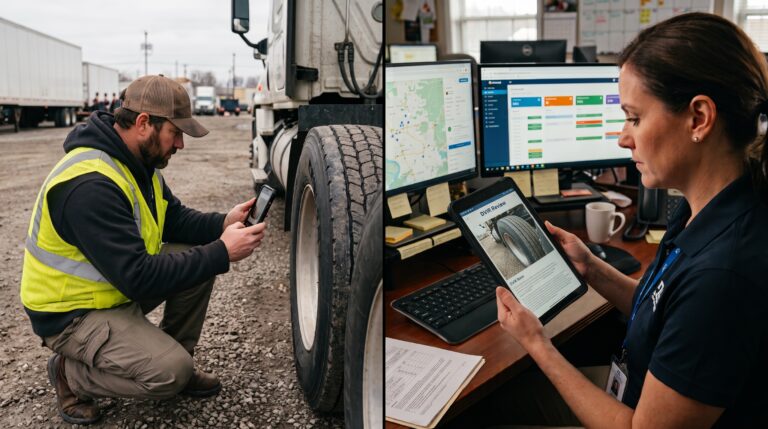
A driver walks past a hairline crack in a light housing because the lot is dim and they’re on their four-hundredth walk-around this month. Nothing about that is a failure of effort. It’s a limit of manual inspection: a process that depends entirely on human attention holding up the same way, every time, no matter how repetitive or rushed the moment is. AI inspections don’t remove that human element from fleet maintenance, but they change what actually gets caught before it becomes a breakdown or a compliance finding. This article covers where manual inspections consistently fall short, what AI inspection software actually catches that manual review tends to miss, and where driver judgment still does work AI can’t replace.
What Is AI Inspection Software, and How Is It Different From a Manual Inspection?
AI inspection software uses computer vision and machine learning to automatically review inspection photos and data, flagging defects, anomalies, and compliance gaps that a manual visual check might miss. A manual inspection depends on one person’s attention, experience, and alertness in that specific moment. AI inspection review applies the same detection standard to every photo, every time, regardless of how tired the driver is or how many inspections they’ve already completed that shift.
Where Manual Inspections Fall Short
Manual inspections aren’t unreliable because drivers are careless. They’re unreliable in specific, predictable ways tied to how human attention actually works.
Inspection fatigue and repetition
A driver completing the same pre-trip walk-around daily, sometimes twice a day, naturally starts to skim. This isn’t a discipline problem. It’s a well-documented effect of repetitive visual tasks, and it means the fiftieth inspection of the month gets less scrutiny than the first, even from a conscientious driver.
Inconsistent standards across drivers and shifts
What one driver considers “worth flagging,” another might consider normal wear. Without a consistent standard applied across every inspection, the same defect can get reported by one driver and waved through by another on the same vehicle a week later.
Subtle defects that are easy to miss visually
Hairline cracks, early-stage tread wear, small fluid leaks, and minor corrosion are exactly the kind of issues that are technically visible but easy to miss in a quick visual scan, especially in poor lighting or bad weather. These are often the defects that turn into the most expensive repairs, precisely because they went unnoticed for weeks.
What AI Actually Catches That Manual Review Misses
AI inspection review isn’t about replacing the driver’s walk-around. It’s about catching what a rushed or repetitive visual check consistently lets through.
Defects flagged from photo analysis, not just checklist answers
A manual DVIR often relies on a driver marking a checklist item pass or fail based on a glance. AI inspection review analyzes the actual photo captured during the inspection, catching visible defects even when the driver’s own checklist answer says everything looked fine.
Consistent flagging standards across every driver, every time
Because AI applies the same detection criteria regardless of who’s doing the inspection or how many they’ve done that day, fleets get a level of consistency that manual review structurally can’t match at scale, especially across large driver pools.
Patterns across inspection history a single check can’t reveal
A single inspection shows a snapshot. AI-assisted review, tied into inspection history over time, can surface a recurring issue on the same vehicle or component that would look like an isolated flag if each inspection were only reviewed on its own.
Where Manual Inspection and Driver Judgment Still Matter
AI inspection software is a review layer, not a replacement for the person actually standing next to the vehicle.
Physical checks AI can’t perform
Sounds, smells, and feel remain entirely in the driver’s domain. A grinding noise on startup, a fuel smell, or a soft brake pedal are things no photo-based review can detect. Manual inspection still does the sensory work AI simply isn’t built for.
Context only a driver on-site has
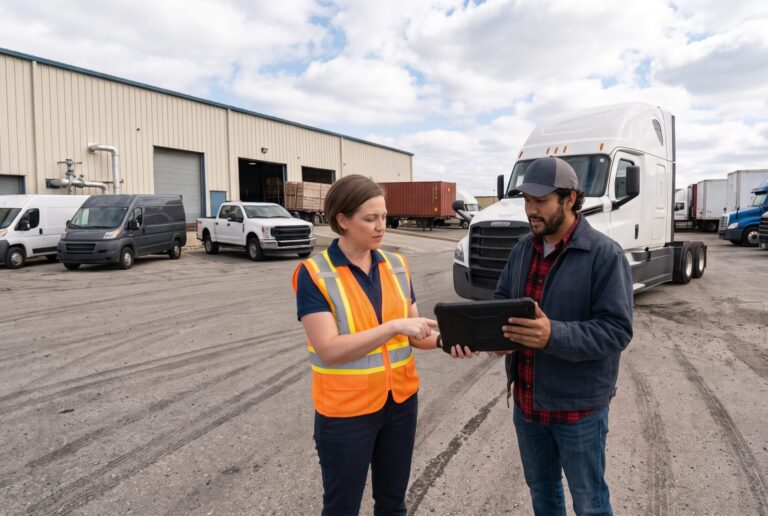
A driver knows if a vehicle handled differently on today’s route, or if a noise started after hitting a pothole an hour ago. That situational context shapes what gets flagged and how urgently, and it’s information AI reviewing a photo after the fact doesn’t have.
The Cost of What Manual-Only Inspections Miss
The defects that slip through manual review rarely disappear. They resurface later, usually at a worse time and a higher cost. Unplanned repairs typically cost 3 to 9 times more than the same job done as planned maintenance, according to industry benchmarks, and a defect caught two months late because a driver glanced past it is a textbook example of how a planned fix turns into an unplanned one. Fleet downtime already costs U.S. businesses an estimated $50 billion or more per year, and inconsistent inspection quality is a quiet contributor to that number every time a catchable issue gets missed.
How Whip Around’s AI Inspections Pro Fits Into a Fleet Maintenance Program
AI Inspections Pro is built specifically to close this gap. It automatically reviews photos captured during a driver’s inspection, flagging defects and anomalies a rushed or fatigued visual check might miss, and it applies that same standard across every driver and every shift. Rather than relying solely on a driver’s checklist answer, it reviews the actual photo evidence tied to each DVIR, reducing the review burden on fleet managers while making the record itself more consistent and auditable.
That AI-flagged defect data flows directly into Whip Around’s fleet maintenance software, so an issue caught by photo review becomes a work order the same way a driver-reported defect would, without a separate manual step. It also strengthens the audit trail behind Whip Around’s fleet compliance software, since flagged defects are backed by photo evidence, not just a checklist mark, if a DOT auditor asks how an issue was identified.
General Insulation’s inspection and compliance journey with Whip Around shows what this shift looks like in practice: moving from inspections drivers completed as a formality to a process the fleet could actually rely on for catching real issues consistently. For a broader look at where AI is heading across fleet operations, Whip Around’s coverage of AI in fleet management and AI’s role in fleet maintenance and compliance covers the wider trend this fits into.
Building an Inspection Program That Uses AI Where It Helps Most
The fleets getting the most value from AI inspection software aren’t asking it to do everything. They’re using it for what it’s actually good at.
Let AI handle photo review and flagging, not final judgment calls. AI is strongest at catching visible defects consistently across volume. Decisions about severity, urgency, and whether a vehicle should be pulled from service still benefit from a person reviewing the flagged item in context.
Route flagged items straight into the maintenance workflow. A defect AI catches is only useful if it turns into a work order automatically, the same way a driver-reported issue would, rather than sitting in a separate report nobody checks.
Track catch rate over time to see what’s actually improving. Comparing defect catch rates before and after adding AI review, visible in fleet reporting software, is how a fleet confirms the tool is actually surfacing issues that were previously getting missed, not just adding noise.
AI and Manual Inspection Aren’t Competing, They’re Complementary
The honest answer to “AI vs. manual inspections” isn’t that one replaces the other. Manual inspection still does the sensory and contextual work no camera can, while AI inspection review closes the consistency gap that fatigue, repetition, and human variability leave behind. Fleets combining both are the ones catching defects earlier, with a more consistent standard, than either approach manages on its own.
If your inspection program still depends entirely on how alert a driver is on any given walk-around, it’s worth seeing what AI-assisted review adds. Book a demo to see AI Inspections Pro in action, or start a free trial to try it with your own fleet.