A combine breakdown in the middle of an ideal harvest day isn’t just a repair bill, it’s hours you can’t get back, in a window that may already be shorter than you’d like. When weather is cooperating, crew is ready, and the crop is at peak condition, a machine sitting idle in the field is one of the most expensive problems in agriculture.
For enterprise operations managing thousands of acres across multiple pieces of harvest equipment, agriculture equipment downtime during the harvest window is the central operational risk every season. The fleets that consistently protect uptime during harvest aren’t just fast at repairs, they’re doing the work weeks before the window opens to make sure failures don’t happen at the worst possible moment.
This guide covers why harvest downtime is uniquely costly, what causes it, and the strategies enterprise agriculture operations use to reduce it — from pre-season preparation through in-season monitoring.
When Equipment Fails During Harvest, the Clock Costs You More Than the Repair
Equipment downtime in agriculture carries a cost that most other industries don’t face: the window to recover it is often gone by the time the repair is done.
According to Iowa State University Extension research, a single eight-hour day of equipment downtime costs growers approximately $2,400 during planting and $900 during harvest when operating 12-row equipment. But the per-day repair cost is only part of the story. A late harvest compounds losses through yield drag — combines started in late September consistently outperform those still running in mid-October by roughly 10 bushels per acre in corn. At current corn prices, that gap translates to $27 to $45 per acre in lost revenue. Multiply that across a large-scale operation and a few days of harvest delays can exceed the cost of the breakdown itself many times over.
For enterprise agriculture fleets managing multiple crops, multiple machines, and multiple operators, the stakes are even higher. A single combine out of service can create a bottleneck that slows the entire harvest chain — grain carts waiting, trucks idling, crews standing by — turning one equipment failure into a whole-operation slowdown.
The goal of reducing agriculture equipment downtime during harvest isn’t just faster repairs. It’s preventing failures from happening during the window at all.
Why Harvest Windows Are Different From Any Other Operating Period
Most industries can absorb equipment downtime by shifting work to another day, another shift, or another machine. Agriculture during harvest can’t.
The harvest window is defined by the intersection of crop maturity and weather. Miss it, and yield quality declines. Push it further, and you’re harvesting in conditions that increase losses and create storage risks. For row crops like corn and soybeans, the window when conditions are ideal for harvest can be as short as two to three weeks. In a wet autumn, it may shrink to a handful of good days separated by rain holds.
Enterprise operations face additional complexity. Managing multiple crop types across geographically spread fields means coordinating combines, grain carts, transport trucks, and support equipment in a sequence that any single breakdown can disrupt. A combine sitting down for four hours in one field can mean a tractor and grain cart waiting idle, a truck driver sitting at the elevator, and a crew that can’t move forward. The cascade effect of one failure ripples across the whole operation.
This is why harvest equipment reliability is a fundamentally different problem than routine fleet management. Reactive maintenance (fixing things when they break) works acceptably in most of the year. During a two-week harvest window, it’s a significant operational risk.
The Most Common Causes of Harvest Equipment Downtime
Understanding what takes harvest equipment offline is the first step to preventing it. The same failure categories appear repeatedly across enterprise ag operations:
Deferred pre-season maintenance. The single most common cause of harvest breakdowns is maintenance that was due before the season but didn’t get done: worn belts that should have been replaced, bearings running rough, hydraulic lines showing wear, filters past their service life. Equipment that hasn’t had a thorough pre-season service going into a heavy harvest load will find its weak points quickly.
Lack of daily inspection discipline. Issues that start as early warning signs — a slight hydraulic leak, an unusual noise, a header running slightly off — go undetected when operators aren’t doing structured pre-use checks. By the time the failure is obvious, the repair is bigger and the downtime is longer.
Parts availability gaps. Emergency harvest repairs stall when the right part isn’t in inventory. Sourcing a specific belt or bearing from a dealer during peak harvest season can add hours or days to a repair that would otherwise take 30 minutes. Fleets that don’t audit parts inventory before harvest are routinely caught by this.
Operator error under pressure. Harvest pushes operators hard. Fatigue, time pressure, and unfamiliarity with specific equipment (common when seasonal labor is involved) lead to improper loading, missed shutdown procedures, and failure to report developing issues. Operator behavior is a significant and often underestimated downtime driver.
Commercial vehicle compliance failures. Grain trucks and semi-trucks hauling harvested crop on public roads are subject to DOT and FMCSA requirements. A vehicle pulled out of service for a compliance issue during harvest doesn’t just cost that truck, it can back up an entire grain transport operation at exactly the wrong time.
How Enterprise Agriculture Fleets Reduce Equipment Downtime Before Harvest Begins
The best time to prevent harvest downtime is 4 to 6 weeks before the window opens. Fleets that treat pre-season preparation as a fixed operational deadline (not something to get to when time allows) have measurably fewer in-season failures. Pre-season maintenance programs can reduce equipment breakdowns during harvest by up to 60%.
1. Build a Pre-Harvest Inspection and Service Schedule
Every piece of harvest equipment (combines, header units, grain carts, augers, tractors, support vehicles) should have a mandatory pre-season service completed and documented before harvest begins. Schedule this work using engine hours, not calendar dates; a machine that’s been run hard has different service needs than one that’s been sitting.
Build equipment-specific checklists that target the wear items most likely to fail under harvest load: belts, bearings, chains, concaves and sieves on combines, hydraulic lines, tires, and electrical systems. The checklist should be completed and signed off by a technician, with the service record stored digitally against that machine’s asset history. That service history becomes the baseline for the in-season maintenance decisions that follow.
Understanding vehicle maintenance basics — from service interval logic to how to build a reliable inspection workflow — is the operational foundation that pre-harvest scheduling sits on.
2. Audit Parts Inventory Before the Window Opens
The worst moment to discover you’re out of a combine belt or a specific hydraulic fitting is when a machine is down in the field. Run a full parts inventory audit in the weeks before harvest and stock critical wear items, especially those that are high-failure, hard to source locally, or have long dealer lead times during peak season.
Set minimum reorder thresholds for the parts most likely to be needed during harvest and assign clear ownership of inventory management during the operating season. A well-stocked service truck and a known parts location reduce repair time significantly. This is the kind of detail that looks like overhead until the harvest clock is running.
3. Run Load Testing and Pre-Season Field Trials
Idle checks catch obvious issues: fluid levels, visible wear, loose components. They don’t catch the bearing that starts to fail under harvest load, or the sieve that runs fine empty but vibrates under capacity. Before the harvest window opens, run equipment under realistic operating conditions.
Put combines through actual harvest cycles in a test area. Run grain carts through full load and unload cycles. Check header function at working speed and reel position. Load testing surfaces failures that static inspection misses, and finding them in a trial run (when repair time doesn’t cost crop) is always better than finding them on the first harvest day.
4. Qualify and Brief Seasonal Operators
Enterprise harvest operations frequently bring on seasonal operators who may be experienced with farm equipment generally but unfamiliar with specific machines or the operation’s protocols. An operator who doesn’t know what pre-use check to run, what warning signs to report, or what a machine’s load limits are is a downtime risk that no amount of equipment preparation can fully compensate for.
Run a structured equipment orientation for each seasonal operator before harvest begins: walk through the pre-use check process for each machine they’ll operate, cover the most common failure indicators, and make clear what the reporting protocol is when something seems off. Thirty minutes of orientation can prevent hours of harvest downtime.
5. Confirm Commercial Vehicle Compliance Before Harvest Transport Begins
Grain trucks, semi-trucks, and other commercial vehicles that haul harvested crop on public roads must be in DOT compliance before the first load rolls. This means current DVIRs, no open defects, and operators who understand their obligations under the FMCSA no-defect DVIR rule.
A commercial vehicle put out of service during harvest for a compliance violation doesn’t just cost that vehicle’s operating time, it can back up an entire grain transport chain. Preparing for a DOT safety audit before harvest transport season, not after a problem surfaces, is the right sequence. Truck and delivery fleet management software built for compliance can help keep transport records audit-ready through the season.
Keeping Equipment Running Once Harvest Is Underway
Pre-season preparation reduces the probability of in-season failures — it doesn’t eliminate it. Once harvest is running, the operational habits that protect uptime shift to daily inspection discipline, real-time monitoring, and a clear breakdown response process.
1. Enforce Daily Pre-Use Equipment Checks
A daily pre-use inspection on every piece of harvest equipment is the most reliable in-season tool for catching problems before they become failures. Operators doing a structured check before each operating shift (looking at fluid levels, belt tension, hydraulic lines, header function, tire condition) will catch a developing issue that would otherwise become a mid-field breakdown.
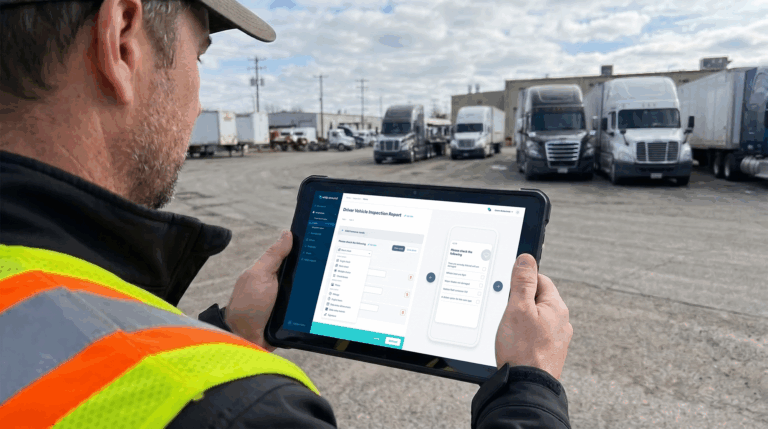
Digital inspection forms on a mobile device take less than five minutes and create a permanent, timestamped record for every check. When an operator flags something — a hydraulic line that looks soft, a bearing running warm, that report goes somewhere immediately. It doesn’t sit on a paper form in a truck cab until someone remembers to check it.
Farmers and ag operations that implement digital tracking consistently reduce missed maintenance by 25% and increase equipment uptime by 20%, according to industry estimates. The daily check is where that improvement starts.
2. Monitor Telematics and Engine Data in Real Time
Modern harvest equipment — combines in particular — generates continuous operational data: engine load, oil temperature, hydraulic pressure, fault codes, and separator and rotor performance metrics. Fleets that monitor this data in real time have the ability to catch anomalies before they precede a failure, rather than discovering the failure when the machine stops.
When telematics integrations connect equipment data to fleet management software, fault codes can automatically trigger maintenance alerts or work orders. The shop knows about a developing issue before the operator radios in — and in some cases, before the operator notices. That’s the difference between scheduling a 30-minute repair during a weather hold and facing a two-hour breakdown at peak harvest.
3. Schedule Brief Maintenance Windows Around Operational Pauses
Even during active harvest, natural pauses exist — weather holds, grain elevator queues, end-of-shift shutdowns, combine cleanup between fields. These are opportunities for quick inspections, lubrication cycles, and filter checks that don’t require taking equipment offline for a planned maintenance window.
Build the habit of using unplanned downtime productively. A 20-minute inspection during a rain delay that finds a belt showing wear is far less costly than the two-hour breakdown that results from ignoring that belt until it snaps. During harvest season, the maintenance window that’s always available is the one right in front of you.
4. Set Up a Rapid Response Protocol for Breakdowns
Even the best-prepared harvest operations will have breakdowns. The variable that separates a one-hour repair from a four-hour repair is almost always how fast the right technician, right parts, and right information get to the downed machine.
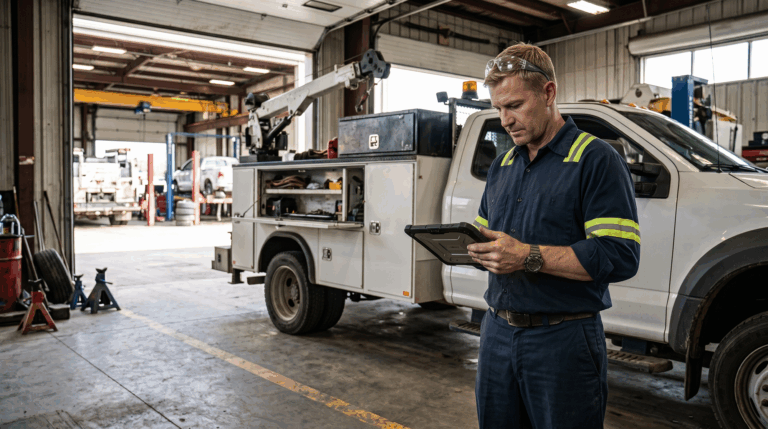
Define the breakdown response protocol before harvest starts: who gets the notification, who responds and with what tools, what parts are on the service truck, and how service history for the downed machine is accessed. A technician who can pull up a combine’s full inspection and maintenance record on a phone, including what was flagged in the last pre-use check, diagnoses faster and wastes less time backtracking.
The response protocol should also include a clear escalation path for breakdowns that can’t be resolved on-site. Knowing in advance which dealer to call and whether a loaner machine is available is a decision that shouldn’t happen for the first time when a combine is sitting idle.
How Whip Around Supports Agriculture Fleet Uptime
Enterprise agriculture operations managing a mixed fleet (combines, tractors, grain carts, support equipment, and commercial transport vehicles) typically run on disconnected systems: paper inspection logs, spreadsheet-based PM schedules, and phone-call-based breakdown response. When harvest pressure is on, those gaps become expensive.
Whip Around brings inspection and maintenance workflows together in a single platform that works for any physical asset, not just DOT-regulated vehicles. For ag fleet managers, this has a few direct applications.
Customizable inspection forms for any equipment type. Whip Around’s digital inspection forms can be built for combines, tractors, grain carts, and support vehicles — with different checklists for pre-season service, daily pre-use checks, and post-harvest inspection. Operators complete checks on mobile, results are stored against the asset record, and any flagged defect automatically generates a maintenance work order. Nothing goes through a paper form that lives in someone’s truck.
Engine-hour-based PM scheduling. Whip Around’s preventive maintenance scheduler lets you set service triggers by engine hours, calendar date, or custom intervals — and sends automated reminders before the PM window hits. Schedule pre-harvest service requirements weeks in advance and get notified before they come due, rather than tracking them manually. This is what equipment maintenance software should do for an operation with this much seasonal pressure.
Defect-to-work-order automation. When an operator flags a hydraulic issue in a morning pre-use check, a maintenance work order is automatically created and assigned. The shop sees it in real time — no transcription delay, no paper trail that gets lost during a busy harvest day.
Commercial vehicle compliance. For the grain trucks, semi-trucks, and other CMVs in the operation, Whip Around handles DVIR recordkeeping and compliance documentation alongside equipment inspections, keeping the whole fleet’s records in one place.
What to Measure: Key Metrics for Harvest Season Fleet Performance
Tracking agriculture equipment downtime effectively means monitoring a short list of metrics consistently through the harvest window. These are the numbers that matter most:
Equipment Availability Rate — the percentage of time each machine is ready to operate, excluding planned maintenance windows. Target 95% or higher during active harvest. A machine consistently below that threshold has a systemic issue worth investigating.
Mean Time to Repair (MTTR) — average time from breakdown to return to service. Track this by machine and by failure type. Rising MTTR signals either parts availability gaps or technician capacity constraints.
Planned vs. Unplanned Maintenance Ratio — the percentage of total maintenance hours that were scheduled versus reactive. A ratio below 70% planned is a signal that the PM program isn’t catching failures early enough.
Pre-Use Inspection Completion Rate — percentage of required daily checks that were actually completed. Gaps here — operators or sites consistently skipping checks — are where in-season failures tend to originate.
Parts Stockout Frequency — how often a breakdown was extended because the right part wasn’t in inventory. Even one instance per harvest season is worth addressing; repeated stockouts signal a parts planning problem.
These five metrics, tracked consistently through the harvest window and compared against prior seasons, give an operations team a clear picture of where the fleet is performing and where it’s failing.
Protect Your Harvest Before the Window Opens
Agriculture equipment downtime during harvest is a different problem than equipment downtime the rest of the year. The window to recover from it is narrow, the cost compounds in ways that outlast the repair bill, and the pressure of harvest conditions makes both failures and their consequences worse.
The operations that protect uptime during harvest consistently do the same things: they service equipment before the window opens, not during it. They run daily inspections that catch problems early. They have a breakdown response protocol ready before they need it. And they track the metrics that tell them whether the plan is working.
Whip Around gives fleet managers the inspection and maintenance infrastructure to run that kind of operation for every asset in the fleet — from combines to grain trucks — in one platform. Book a demo to see how it works, or start a free trial before your next season opens.