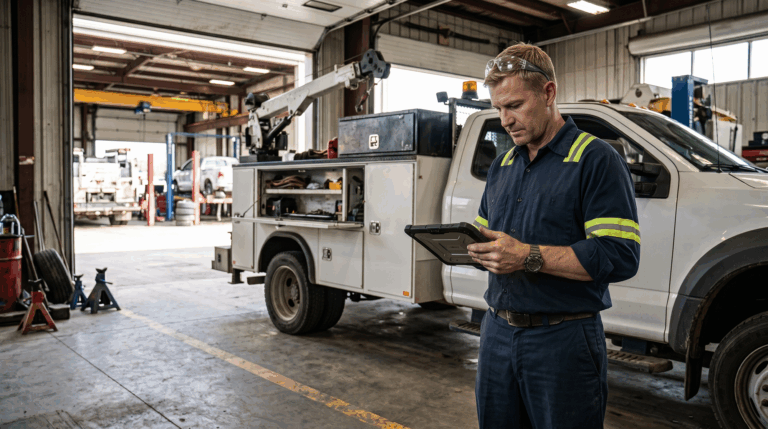
Regular tractor inspections are critical for maintaining safety, compliance, and productivity on farms and agricultural worksites. Tractors operate in demanding environments, often across long shifts and varying terrain, which makes consistent inspections essential to prevent breakdowns, accidents, and regulatory issues.
A structured tractor inspection checklist helps safety managers and fleet leaders ensure equipment is safe to operate, issues are identified early, and compliance requirements are met without slowing down daily operations.
Below is a practical, easy-to-follow tractor inspection checklist you can use as part of a proactive safety and maintenance program.
Tractor Inspection Checklist Items to Monitor Closely
Inspection frequency should always align with manufacturer recommendations, internal safety policies and applicable regulations. The checklist below is organized by inspection cadence to make it easier to integrate into daily operations.
Pre-Operation Inspection Checklist
These checks should be completed before starting the tractor:
- Check engine oil, coolant, fuel and hydraulic fluids for proper levels and leaks
- Inspect tires for damage, inflation and wheel nut security
- Ensure steps, platform and cab are clean and free of debris
- Confirm all guards, shields and covers are in place
- Check seat condition, seatbelt function and ROPS or cab integrity
- Test brakes, steering and clutch
- Check lights, indicators and horn
- Inspect hitch, PTO shield and attached implements
- Ensure slow-moving vehicle (SMV) emblem and reflectors are visible
Daily or Every Shift
These checks help catch wear and tear from regular use:
- Check battery mount and terminal connections
- Inspect belts and hoses for wear or cracking
- Look for loose, missing, or damaged parts
- Clean and inspect mirrors, glass and wipers
- Verify gauges and warning lights function correctly
- Test PTO engagement in a safe area
- Check hydraulic functions and load-holding ability
Weekly
Weekly inspections focus on components that degrade over time:
- Review tire tread, wear patterns and sidewalls
- Check steering linkage and front axle for excessive play
- Inspect hitch and towing hardware for wear or damage
- Inspect hydraulic hoses and cylinders
- Check wiring, connectors and lighting cables
- Confirm safety decals are present and readable
Monthly
Monthly inspections support long-term reliability:
- Clean and inspect battery connections
- Check air intake system and cleaner housing
- Test safety interlocks and neutral start functionality
- Inspect pedals and controls for smooth operation
- Inspect wheel rims and wheel weights
- Verify parking brake holds on an incline
Quarterly or Seasonal
These checks are especially important during seasonal transitions:
- Service or replace engine air filters
- Inspect and adjust drive belts
- Inspect radiator, hoses and cooling system
- Lubricate all specified grease points
- Inspect PTO shaft, yokes and protective shields
- Check fire extinguisher and first-aid kit availability
Annual Inspection
Annual inspections support compliance and long-term asset health:
- Replace fluids and filters according to OEM schedules
- Inspect brakes and hydraulic brake systems
- Check frame, ROPS and structural components for damage
- Inspect front axle and steering geometry
- Review maintenance records and recurring defects

Tractor Compliance and Checklist Requirements
Beyond safety, tractor inspections support regulatory compliance. While requirements vary by location and operation type, common compliance expectations include:
- Daily Vehicle Inspection Reports (DVIRs) where applicable
- Annual DOT inspections for tractors operating on public roads
- A documented, systematic maintenance program
- Readiness for roadside inspections under FMCSA guidelines
Using structured inspection records, especially digital ones, helps demonstrate compliance during audits and inspections. For fleets managing mixed equipment types, aligning tractor inspections with an equipment inspection checklist and a standardized dvir checklist can simplify reporting and improve consistency.

Keep Your Fleet Safe With Digital Inspections
Paper checklists are easy to lose, difficult to audit and time-consuming to manage at scale. Digital inspections make it easier for operators to complete checks accurately while giving safety leaders real-time visibility into equipment condition.
Using fleet inspection software allows drivers and technicians to complete tractor inspections on mobile devices, attach photos to defects and automatically flag issues that need attention. This reduces manual data entry and ensures nothing slips through the cracks.
Digital inspections also support software for fleet compliance by creating audit-ready records that are easy to retrieve and share. For fleet safety managers, this visibility helps identify trends, address recurring issues and reinforce a strong safety culture across agricultural operations.
Whip Around’s customizable inspection forms and AI-powered insights make it easier to standardize tractor inspections, track defects to resolution and keep equipment safe and compliant without adding administrative burden.
Ready to Simplify Tractor Inspections?
A clear tractor inspection checklist is the foundation of safer, more compliant farming operations. When paired with digital inspection tools, it becomes a powerful way to reduce risk, prevent downtime and protect both operators and equipment.
Explore Whip Around to see how digital tractor inspections can streamline your safety and compliance processes or book a demo to see the platform in action.