How Do Enterprise Fleets Standardize Inspections Across 50+ Locations?

Table of Contents

How Do Enterprise Fleets Standardize Inspections Across 50+ Locations?

Running a fleet at a single location is hard enough. At 50 or more sites, the operational variables multiply fast with different supervisors, different drivers, different regional habits, and often wildly different ideas about what a “completed inspection” actually looks like. 

For fleet directors and operations leaders managing at that scale, inspection inconsistency isn’t just an annoyance. It’s a compliance liability, a safety risk, and a serious gap in fleet visibility.

Fleet inspection standardization is how enterprise organizations close that gap. 

This article walks through why consistency breaks down at scale, what a standardized inspection program actually requires, and the steps large fleets use to build one that holds across every location.

Why Inspection Consistency Breaks Down at Scale

Inspection programs that function well at one or two locations tend to fracture as organizations grow. When each regional manager or site supervisor builds their own process, you end up with a patchwork. One location uses a printed paper checklist. Another skips post-trip DVIRs because “the trucks don’t go far.” No one at the corporate level has a clear picture of what’s actually being inspected, how often, or what defects are going unreported.

Paper-based systems make this worse. If a DOT safety audit touches any location, the fleet director may be scrambling to reconstruct records they never had consolidated access to in the first place. The result is a fleet where compliance depends entirely on which location you’re looking at — and where a failure at one site can affect the organization’s overall safety standing.

What ‘Standardized Inspections’ Actually Mean for Enterprise Fleets

Fleet inspection standardization means every location, every driver, and every supervisor follows the same inspection process — not just a similar one. It covers four interconnected elements:

  • Consistent inspection items: The same checklist applies to the same vehicle type regardless of which yard the vehicle operates out of.
  • Consistent pass/fail thresholds: What counts as a defect at Location A counts as a defect at Location Z. There’s no room for individual interpretation on safety-critical items.
  • Consistent escalation workflows: When a defect is flagged, the same process governs how it gets reported, reviewed, and resolved — whether the truck is in Denver or Dallas.
  • Consistent recordkeeping: Inspection reports are stored in a single, searchable system that fleet leadership can access without contacting each location individually.

Without all four elements, you don’t have a standardized inspection program, you have a policy that people may or may not follow in roughly the same way.

The Compliance Stakes for Multi-Location Fleets

Federal inspection requirements aren’t optional or location-specific. Under 49 CFR 396.11, drivers of CMVs over 10,000 lbs GVWR must complete a DVIR at the end of each day a vehicle is used. The FMCSA no-defect DVIR rule provides some relief for no-defect trips, but documentation requirements still apply across your entire fleet, not just the locations that take compliance seriously.

A missed DVIR at one regional yard is still a federal violation. And violations compound. CSA scores are calculated at the carrier level, so enforcement events at any location affect your organization’s overall safety measurement score. The FMCSA safety prioritization system uses those scores to determine which carriers receive intervention, including compliance reviews and investigations.

The compliance math is straightforward: the more locations you operate, the more exposure points you have. Standardization ensures no location is operating outside the program.

How Enterprise Fleets Build a Standardized Inspection Program

1. Create a Master Inspection Template Library

Standardization starts at the top. Fleet directors — not site supervisors — should control the master inspection templates, segmented by vehicle and equipment type: Class 8 trucks, trailers, light-duty vehicles, heavy equipment, specialty assets.

Each template should cover the federal minimums (pre-trip items under 49 CFR 392.7, annual inspection criteria under 49 CFR 396.17) plus any internal additions your organization requires. Version control matters here — when a template changes, every location should be on the new version immediately.

2. Define Pass/Fail Criteria Consistently

Vague inspection language is where standardization quietly breaks down. If a checklist item says “check brakes,” one driver does a visual scan and another does a full application test. Neither is technically wrong, but they’re not producing comparable data.

Define what constitutes a defect on each inspection item centrally. Those thresholds should be documented and communicated clearly, so the inspection result doesn’t depend on who’s holding the clipboard.

3. Assign Clear Ownership at Each Location

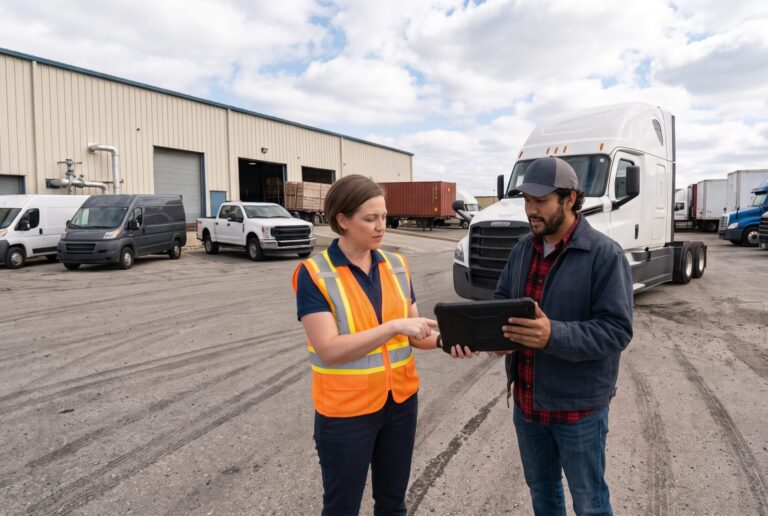
A standardized program without local accountability fails in practice. At each location, define who completes the DVIR, who reviews and signs off on defect items, and who receives escalation alerts for out-of-service conditions. When everyone knows their role, inspections don’t become optional because a supervisor is busy or a driver is running late.

4. Centralize Inspection Records and Reporting

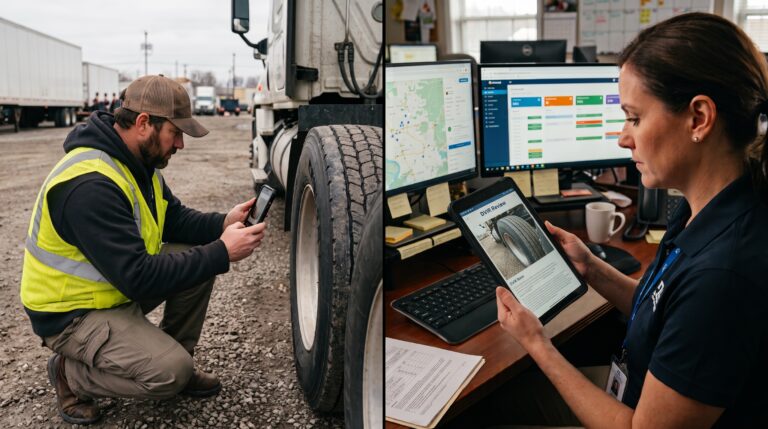
The clearest sign that an enterprise fleet’s inspection program isn’t working is when the fleet director has to call regional managers to find out how inspections are going. All inspection submissions — completions, defects, photos, driver sign-offs — should flow into a single system that fleet leadership can access in real time. That visibility shouldn’t require a phone call or a spreadsheet consolidation exercise.

5. Standardize the Defect-to-Repair Workflow

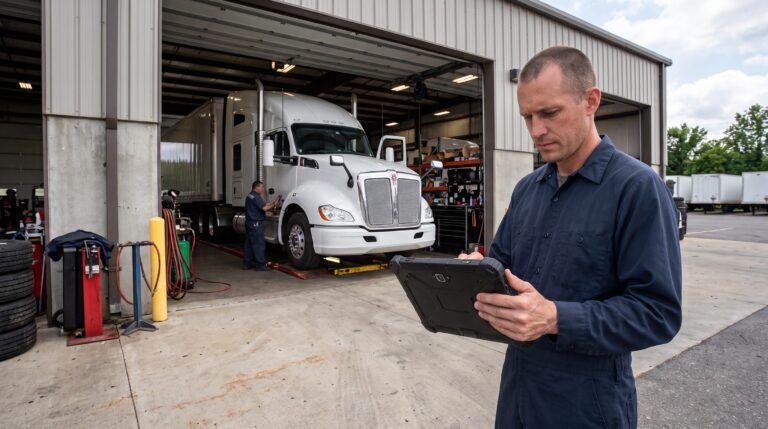
An inspection program that flags defects but doesn’t ensure repairs happen is just paperwork. When a driver flags a defect, a maintenance work order should be generated automatically — and the vehicle should not be cleared for service until the issue is resolved and documented. 

Under FMCSA’s DVIR requirements, the motor carrier must certify that the defect has been corrected before the vehicle goes back into service. That certification needs to be part of the workflow at every location.

6. Train Drivers and Operators Consistently Across Sites

Templates and workflows only work if drivers understand how to use them. Enterprise fleets often have high turnover — particularly in trucking, construction, and landscaping — so inspection training can’t be a one-time onboarding event. Build it into onboarding for every new hire, and push updated training whenever templates change. Brief refresher sessions consistently outperform annual training that no one remembers.

7. Audit Inspection Quality, Not Just Completion

Completion rates are necessary but not sufficient. A fleet where every driver submits an inspection daily but no one ever flags a defect likely has a compliance problem, not a particularly healthy fleet. Spot-check submissions for quality: Are photos attached where required? Are defect rates at a particular location suspiciously low compared to fleet average? Regular quality auditing should be part of how leadership monitors the program.

Common Mistakes Enterprise Fleets Make When Standardizing Inspections

Letting regional managers customize templates freely. Some local adaptation is reasonable, but when customization happens without central oversight, the master template stops being master anything. Establish a process for requesting changes rather than allowing unilateral edits.

Using completion rate as the only success metric. Track defect detection rates alongside completion, and investigate locations where defect rates run consistently lower than the fleet average.

Failing to update templates when regulations change. Federal inspection requirements evolve. If your templates aren’t reviewed at least annually against current regulatory criteria, you may be inspecting against outdated standards.

Not connecting inspections to maintenance workflows. Inspection data that lives in a separate system from maintenance records creates a gap that costs time and increases risk. Fleet managers shouldn’t have to manually cross-reference defect reports against open work orders.

Staying on paper or siloed spreadsheets. At 50+ locations, paper records are functionally unmanageable for fleet-level compliance visibility, especially when preparing for a DOT safety audit.

How Whip Around Helps Enterprise Fleets Standardize at Scale

The challenges described above — template fragmentation, visibility gaps, disconnected repair workflows — are exactly what Whip Around is built to address for multi-location fleet operations.

Fleet directors manage inspection templates centrally, controlling what gets inspected across every location and asset type. When a template needs updating, the change is pushed across the organization without printing a new form or emailing updated PDFs to dozens of regional managers.

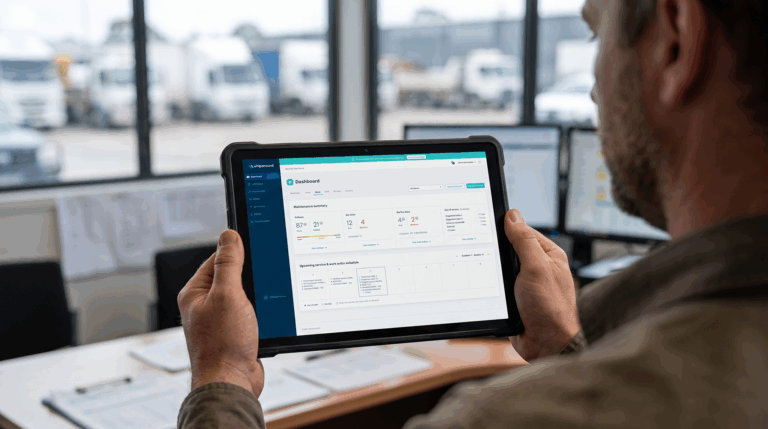
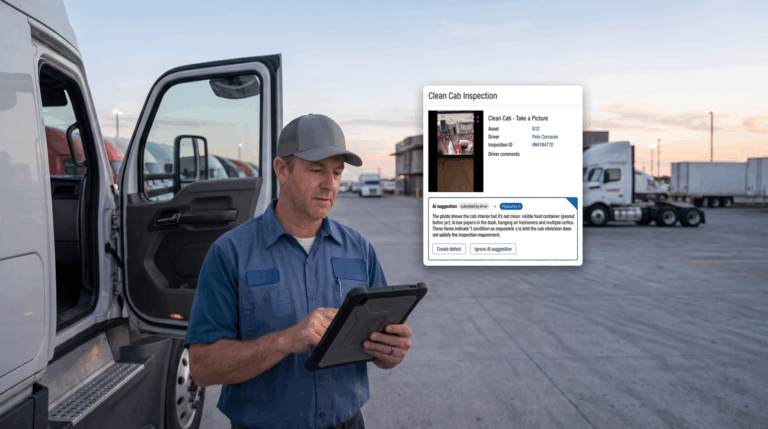
Drivers complete inspections on the Whip Around mobile app, with photo capture built in. Defects flagged in an inspection automatically generate maintenance work orders, creating the documentation trail that connects inspection to resolution. Fleet managers get real-time visibility into completion and defect status across all locations from a single dashboard — including which vehicles are flagged as out-of-service and at which yard.

For organizations using telematics platforms like Geotab, Samsara, or Motive, Whip Around integrates directly to pull engine hours, fault codes, and mileage data into the maintenance workflow. It also supports equipment maintenance software needs beyond regulated vehicles — trailers, heavy equipment, tools, and fixed assets can all be managed through the same platform.

For truck and delivery fleet management specifically, Whip Around’s FMCSA-compliant DVIR workflows ensure every location meets federal recordkeeping requirements, with audit-ready records stored in the cloud and exportable on demand.

General Insulation used Whip Around to improve inspection quality and compliance across their fleet operations. Read their case study to see how the program came together.

Conclusion: Consistency Is a System, Not a Policy

A policy memo that says “all locations will complete daily vehicle inspections” is not a standardized inspection program. It’s a directive that will be interpreted differently at every site and nearly impossible to audit at scale.

Real fleet inspection standardization is a system: centrally managed templates, defined pass/fail criteria, clear local ownership, connected workflows from inspection to repair, and fleet-level visibility that doesn’t require chasing down regional managers. For enterprise fleets operating across dozens of locations, building that system is how you manage compliance exposure, protect your CSA scores, and make sure a safety problem at one yard doesn’t become a fleet-wide liability.

If you’re ready to see what a centralized, multi-location inspection program looks like in practice, book a demo with the Whip Around team or start a free trial to explore the platform yourself.

Gemini_Generated_Image_hkv6lthkv6lthkv6
What Do Waste & Recycling Enterprises Need from Asset Reporting, Route Visibility, and Maintenance Coordination?
Waste and recycling fleets don’t get margin for error. A rear loader goes down mid-route and residential...
Gemini_Generated_Image_kiaedjkiaedjkiae
How Do Enterprise Agriculture Operations Track Equipment Across Multiple Farms?
A single-farm operation can manage equipment with a whiteboard and a maintenance log. At five farms spread...

Get our free guide on silent fleet killers

Learn how to eradicate the hidden maintenance expenses crippling your operations.

Get Our Free Guide on Silent Fleet Killers

DTC Codes: Complete Guide

Table of Contents

Start streamlining your fleet operations with Whip Around.

Experience the transformative impact of our advanced digital fleet maintenance platform.