Oil and Gas Fleet Tracking: How GPS Tracking Improves Safety, Compliance, and Uptime
Managing an oil and gas fleet is unlike managing almost any other. Fuel trucks and tankers operate across remote sites where cell service is unreliable, assets sit idle in the field for hours, and a single breakdown or compliance gap can cost far more than a missed delivery. The stakes (financial, regulatory, and human) are high enough that operating without real-time visibility isn’t a risk most operators can afford.
Oil and gas fleet tracking uses GPS technology to give fleet managers live visibility into where every vehicle and asset is, how it’s being operated, and whether it needs attention. This article covers what fleet tracking actually does in the context of oilfield operations, which capabilities matter most, and how GPS tracking fits alongside the broader systems that keep fleets running safely and in compliance.
What Is Oil and Gas Fleet Tracking?
Oil and gas fleet tracking is the use of GPS hardware and fleet management software to monitor the real-time location, movement, and operational status of vehicles and assets used in upstream, midstream, and downstream oil and gas operations. It applies to fuel tankers, water trucks, service vehicles, field pickups, vacuum trucks, portable compressors, and other equipment deployed across well sites, pipelines, refineries, and distribution networks.
At its core, GPS tracking captures position data at regular intervals and transmits it to a centralized platform where managers can view live maps, review historical routes, set geofenced boundaries, and receive alerts based on vehicle behavior or location events. In the oil and gas context, that data becomes the foundation for safety enforcement, compliance documentation, dispatch efficiency, and maintenance planning.
This is distinct from telematics, which draws on OBD/CAN data and connected sensors to capture engine diagnostics, fuel consumption, and fault codes alongside location. For a full breakdown of how telematics data fits into the picture, see Whip Around’s guide to oil and gas fleet telematics data.
7 Ways Oil Truck GPS Tracking Improves Operations
GPS tracking touches nearly every part of how an oilfield fleet operates day to day. Here’s where it creates the most meaningful impact.
1. Get Real-Time Visibility Across Remote Job Sites
Remote locations are one of the defining challenges of the oil and gas industry. Well pads, pipeline corridors, and staging areas can stretch across hundreds of miles with limited communication infrastructure. Without GPS tracking, a manager has no reliable way to know where a vehicle is, whether it’s en route to the right site, or whether it’s been sitting idle for three hours with no explanation.
Real-time tracking puts a live map in front of dispatchers and operations managers regardless of where vehicles are operating. High-frequency location updates (every 30 to 60 seconds on most platforms) make it possible to confirm delivery arrivals, verify on-site time, and quickly locate vehicles when something goes wrong. For fleets managing assets spread across multiple unmanned sites, this visibility alone justifies the investment.
2. Prevent Fuel Theft and Unauthorized Vehicle Use
Fuel theft is a significant and often underreported problem in the oil and gas sector. Tankers carrying thousands of gallons of crude, diesel, or produced water represent high-value targets, and unauthorized vehicle use after hours compounds the exposure. GPS tracking addresses both risks directly.
Geofencing allows operators to draw virtual boundaries around authorized operating areas like lease sites, terminals, storage yards, and generate immediate alerts when a vehicle crosses a boundary outside scheduled hours. Ignition-on alerts flag vehicles that move without a logged trip. Fuel sensor integrations can flag sudden drops in fuel levels inconsistent with normal operation. These controls create an audit trail that discourages internal theft and provides evidence when incidents require investigation.
3. Improve Driver Safety and Hazardous Material Compliance
Oilfield vehicles frequently carry hazardous materials like crude oil, chemicals, flammable gases, which means driver behavior directly affects public safety and regulatory standing. GPS tracking enables speed monitoring, harsh braking detection, and rapid acceleration alerts that give safety managers data to coach drivers before a recordable incident occurs.
For fleets subject to DOT regulations, GPS data supports Hours of Service (HOS) compliance and provides the documentation needed during audits. Dashcam integrations add incident footage that clarifies liability when accidents occur. A documented fleet safety program for oil and gas built around real-time tracking data gives operators a defensible compliance posture that reactive approaches cannot provide.
4. Optimize Routes to Reduce Fuel Costs and Delays
Fuel is one of the largest variable costs in any fleet operation, and it’s especially significant for high-mileage oilfield trucks running on diesel. Inefficient routing — unnecessary backtracking, idle time at gates, duplicate trips — compounds that cost across every vehicle in the fleet every day.
GPS tracking makes route inefficiencies visible. Historical trip data surfaces patterns: which routes consistently involve delays, which drivers are logging the most idle time, where unplanned stops are occurring. Dispatchers can use live location data to assign the nearest available unit rather than defaulting to a fixed schedule. Over time, this data reduces miles driven, lowers fuel consumption, and improves delivery predictability for customers waiting on haul trucks or tanker deliveries.
5. Monitor Engine Health and Avoid Breakdowns
An equipment breakdown at a remote well site doesn’t just create a repair cost — it can halt production, strand a driver, and require an emergency service call across difficult terrain. Proactive monitoring is the only practical defense against unplanned downtime in environments where response times are measured in hours, not minutes.
GPS platforms with vehicle health integrations surface engine fault codes, battery voltage, and mileage-based maintenance triggers in the same dashboard where managers track location. Automated maintenance reminders ensure that oil changes, filter replacements, and scheduled inspections don’t slip through the cracks simply because a truck has been running remote routes for weeks without returning to the yard.
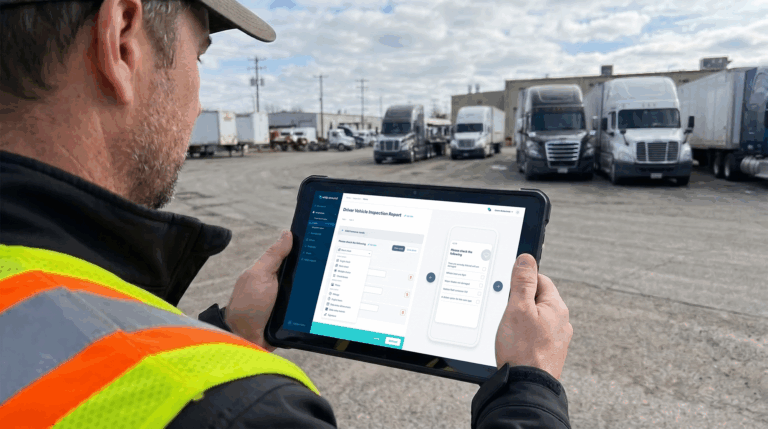
When GPS tracking is paired with an inspection and maintenance system, the full loop closes: mileage triggers an inspection, the driver completes it in the field, defects generate work orders, and the repair record ties back to the asset. Platforms like Whip Around integrate with telematics providers to connect location and diagnostic data directly to mobile inspection workflows, so field teams aren’t operating in silos from the maintenance team.
6. Strengthen Incident Response and Emergency Handling
When a driver fails to check in from a remote site, or when a vehicle triggers a geofence alert in an unauthorized area, response time matters. GPS tracking gives dispatchers the immediate location data they need to send assistance, escalate to emergency services, or confirm that a vehicle is safe and simply out of communication range.
Panic button features available on some GPS platforms allow drivers to trigger an emergency alert with their exact coordinates without placing a call. For fleets operating in areas with limited cell coverage, satellite-based tracking options maintain visibility even when standard cellular networks are unavailable. This capability is not a luxury in oilfield operations, it’s a direct factor in driver safety outcomes.
7. Track Utilization and Improve Fleet Productivity
Fleet size decisions in oil and gas are often driven by peak demand, which can leave a significant percentage of the fleet sitting underutilized during slower periods. Without data, those assets are invisible, and so is the cost of carrying them.
GPS utilization reports show how many hours each vehicle is actually in use versus idle, which assets are consistently sitting at the yard, and where capacity gaps appear across regions or shift windows. This data supports smarter decisions about fleet sizing, deployment patterns, and whether to purchase, lease, or right-size specific asset types. For operators managing large mixed fleets across multiple basins, utilization reporting often surfaces cost savings that more than offset the cost of the tracking platform itself.
Key Features to Look for in an Oil and Gas GPS Tracking System
Not every GPS platform is built to handle the operational realities of oilfield fleets. When evaluating systems, prioritize the following capabilities:
- Real-time location updates at 30–60 second intervals, with live map views that work across large multi-site deployments
- Geofencing and boundary alerts with the ability to define site-specific zones and set after-hours movement triggers
- Driver behavior monitoring including speed, harsh braking, rapid acceleration, and seatbelt compliance
- Maintenance and mileage triggers that generate automated service reminders based on engine hours or odometer readings
- Vehicle health and fault code visibility integrated with OBD/CAN data from the vehicle
- Dashcam integration for incident documentation, especially for vehicles carrying hazardous materials
- Offline and low-connectivity support, including satellite fallback options for remote site coverage
- Reporting and export tools that produce audit-ready documentation for DOT, FMCSA, and internal safety reviews
- Open integrations with maintenance management systems, inspection platforms, and fuel management software
GPS Tracking vs Telematics: What’s the Difference for Oil Fleets?
These terms are often used interchangeably, but they describe different layers of the same stack. GPS tracking tells you where a vehicle is and how it’s moving. Telematics adds the engine layer: fault codes, RPM, fuel burn, battery voltage, and other data pulled from the vehicle’s OBD/CAN bus or connected sensors.
For oil and gas fleets, GPS tracking is typically the entry point. It provides location, geofencing, and driver behavior data with relatively simple hardware installation. Telematics expands that foundation into predictive maintenance, fuel efficiency analysis, and deeper diagnostics. Most modern platforms offer both, but the distinction matters when evaluating what data you actually need and what hardware is required to capture it.
For a complete breakdown of what telematics data covers and how it applies to oilfield operations, see Whip Around’s article on oil and gas fleet telematics data.
How Fleet Tracking Connects with Maintenance and Compliance Systems
GPS tracking generates a continuous stream of data — location events, mileage accumulation, idle time, fault code triggers — but that data only creates operational value when it flows into the systems that act on it. For most oilfield fleets, those systems are maintenance management platforms and compliance documentation tools.
On the maintenance side, mileage and engine hours logged by GPS systems can automatically trigger inspection or service reminders, ensuring that PM schedules don’t depend on drivers self-reporting odometer readings. When a fault code fires on a remote vehicle, that alert can initiate a workflow rather than sitting in a report that gets reviewed days later.
On the compliance side, GPS data creates the timestamped location records that support HOS documentation, IFTA fuel tax reporting, and incident investigations. When a vehicle is involved in an accident or a load discrepancy is reported, GPS history provides the objective record that protects the operator and clarifies what actually happened.
Whip Around integrates with leading telematics providers to connect GPS and diagnostic data directly to mobile inspection workflows and maintenance records. Drivers complete pre- and post-trip inspections in the field, defects generate work orders, and the full record — inspection, defect, repair — is tied to the asset and accessible to the operations team. For more on how this fits into a broader operational framework, see Whip Around’s best practices for oil and gas and the guide to fuel management and tracking software.
GPS Tracking Is No Longer Optional for Oil Fleets
The operational and safety demands of oil and gas fleet management have outgrown manual tracking and radio check-ins. Remote sites, hazardous cargo, strict compliance requirements, and the cost of unplanned downtime all point toward the same conclusion: real-time GPS visibility is a baseline requirement for running a fleet that’s safe, efficient, and defensible under audit.
The question for most operators is no longer whether to implement oil and gas fleet tracking, but which platform connects most effectively with the other systems already in place, and whether it gives field teams the tools they actually need to do their jobs.
Whip Around works alongside the telematics and GPS platforms your fleet already runs, connecting location data to inspections, defect reporting, and maintenance workflows in one place. To see how it fits your operation, book a demo and talk through your specific use case.